Banana Peel, Death’s Agent
By Kylie L. McCormick
While the banana is not synonymous with October and Halloween like the pumpkin, its history in Wyoming is full of tricks and treats.
Bananas have a surprising Wyoming connection. Before Otto Franc, founder of the Pitchfork Ranch near present-day Meeteetse, came West seeking drier climates for his health, he worked in the banana trade with his older brothers, Carl and Charles. Carl Franc is credited with importing the first bananas to New York in 1866, the same year Otto immigrated to the United States from the German Confederation.
The Franc brothers organized a firm under the spelling Frank Brothers and later as the Aspinwall Fruit Company to import the novelty fruit from their plantation in what was then Colombia, on the Isthmus of Panama to the New York and Philadelphia markets. The model they created would soon turn the banana from a novelty tropical fruit to a staple in every American grocery store.
The banana made it to Wyoming at least a year before Otto came to scout the Bighorn Basin and establish the Pitchfork Ranch. In 1877, the Cheyenne Daily Leader published a story about a Nebraska granger who encountered “a bunch of bananas for the first time” in Cheyenne. The story isn’t the first mention of bananas in a Wyoming newspaper; Cheyenne papers had been publishing news articles about the banana trade since 1868, but it is the first mention of bananas in Wyoming. One thing is clear, by 1877 the fruit had made its way West, and with it came hazards.

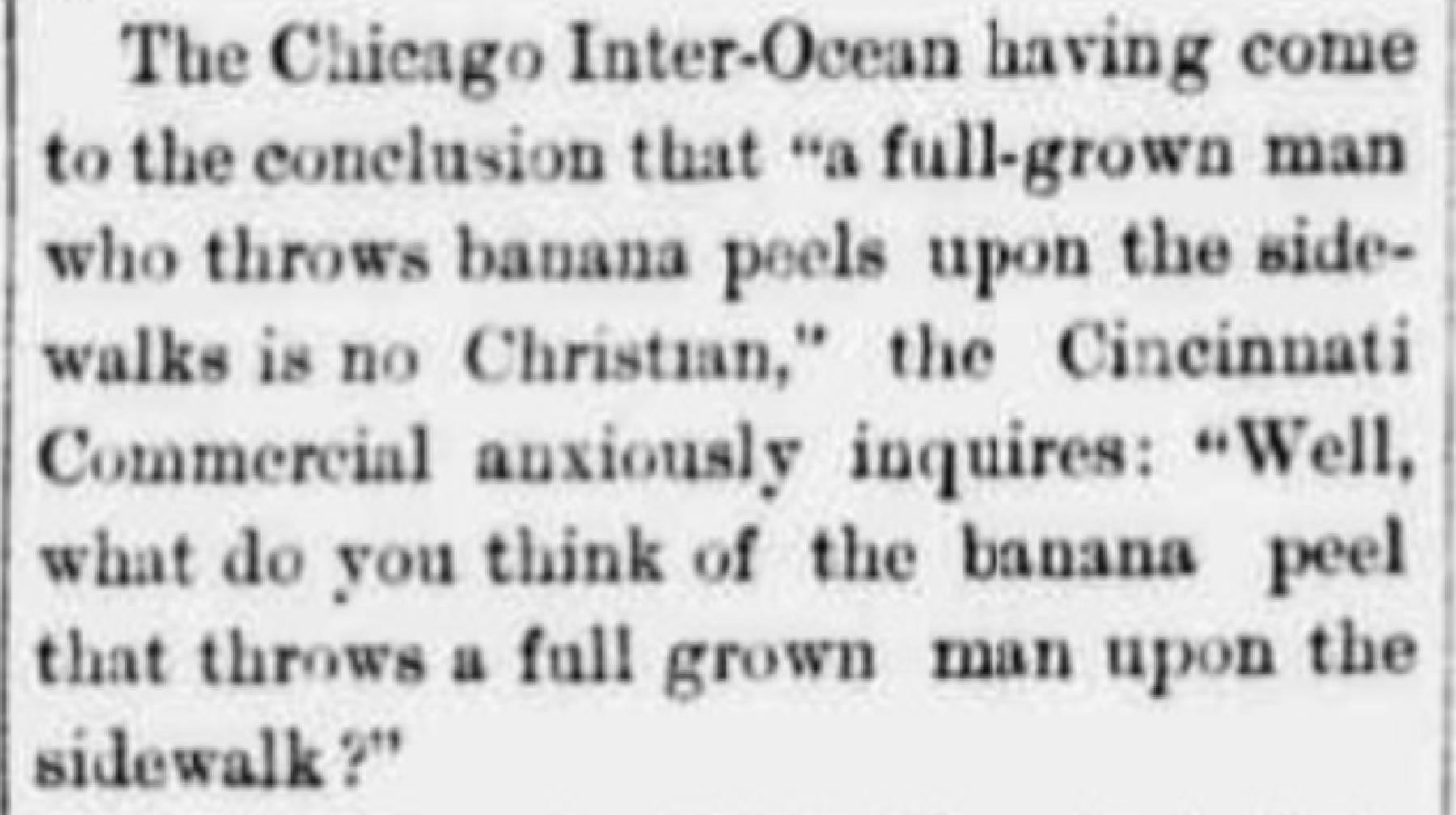
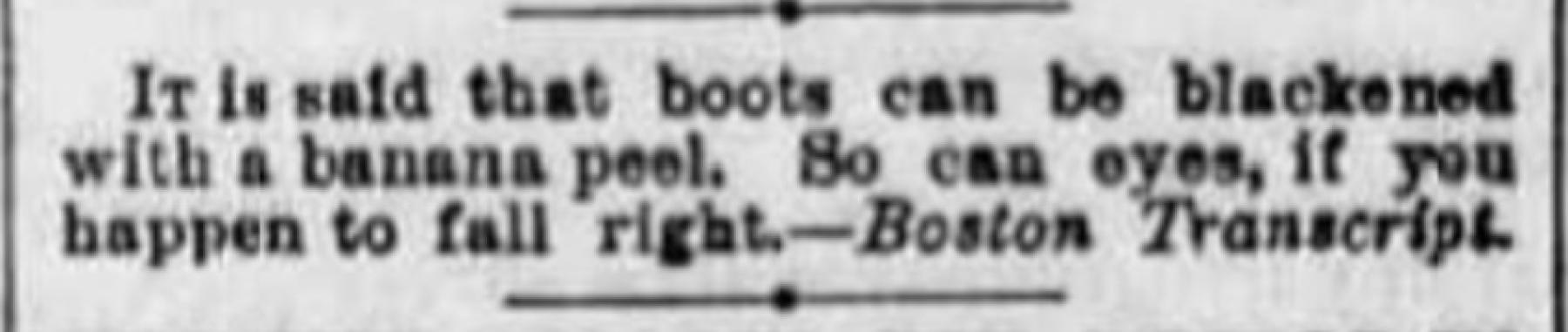
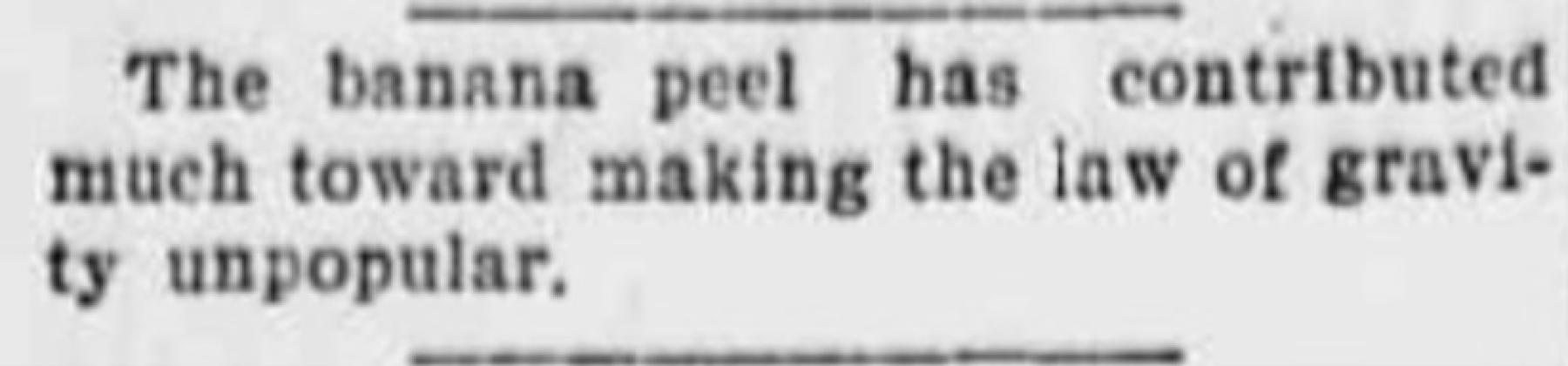
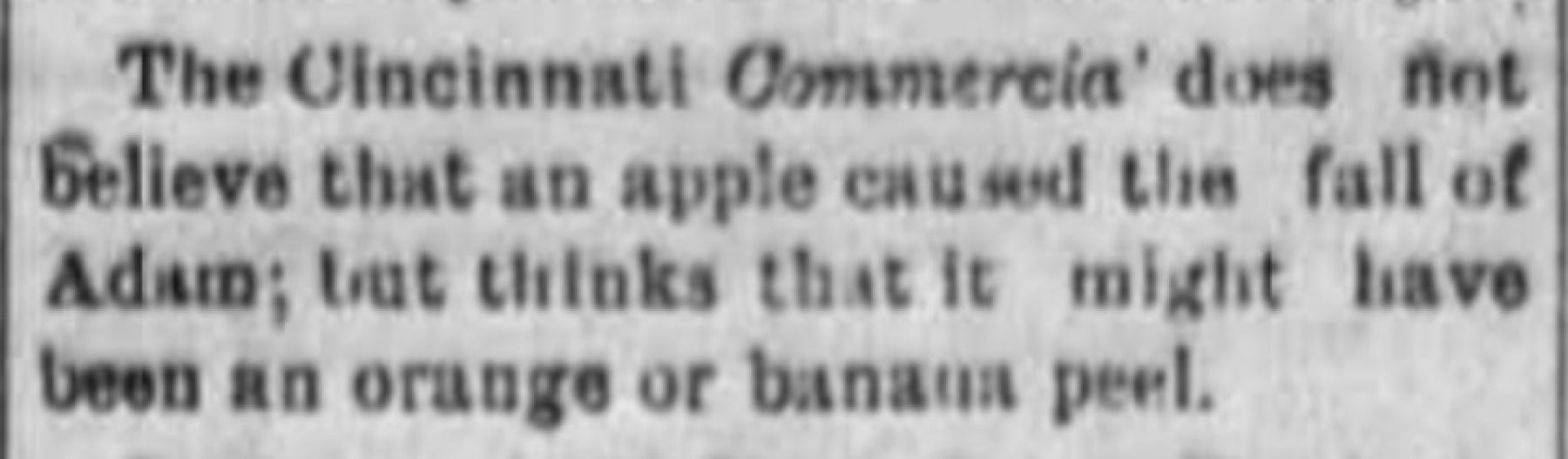
The first joke printed in Wyoming about banana peels came two years later, again in the Cheyenne Daily Leader: “The Cincinnati Commercial does not believe that an apple caused the fall of Adam; but thinks that it might have been an orange or banana peel.”
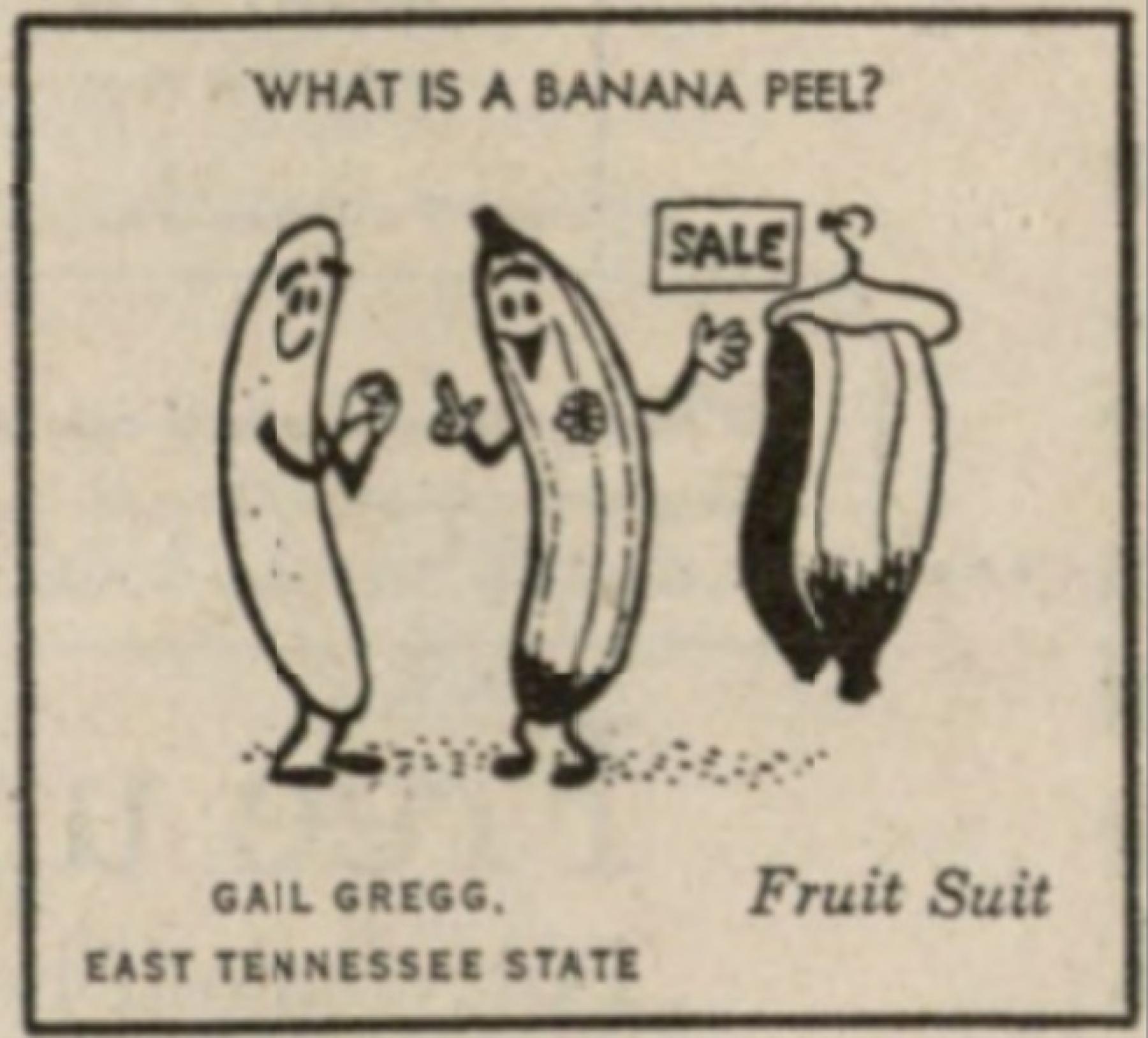
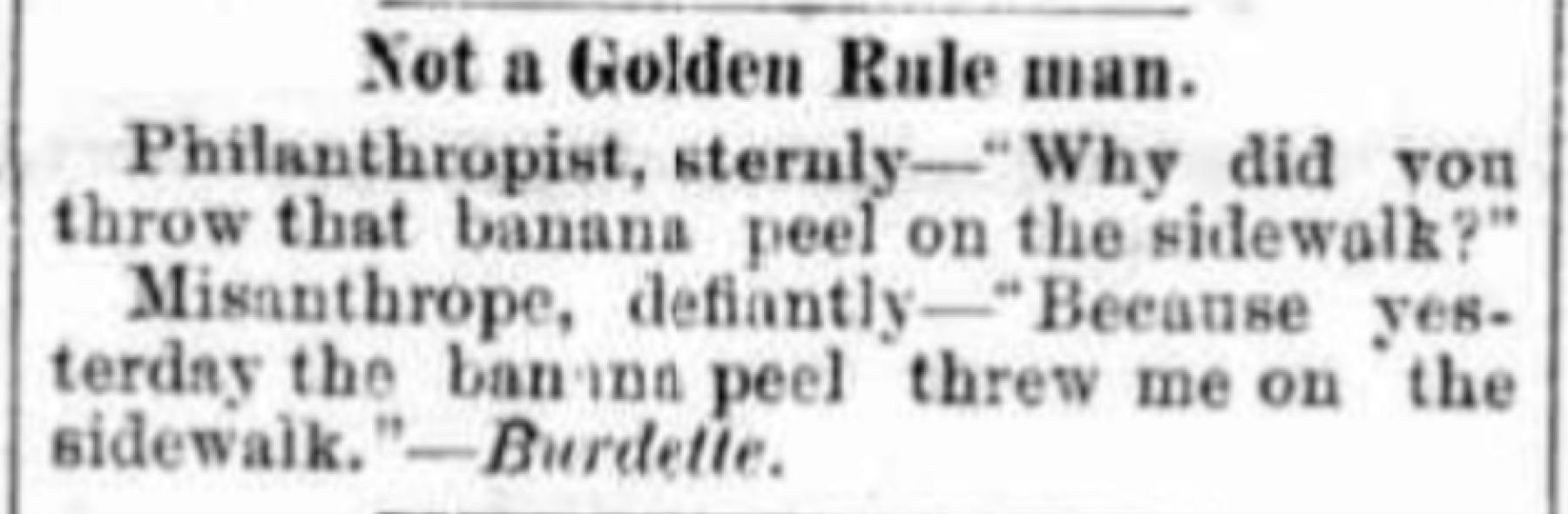
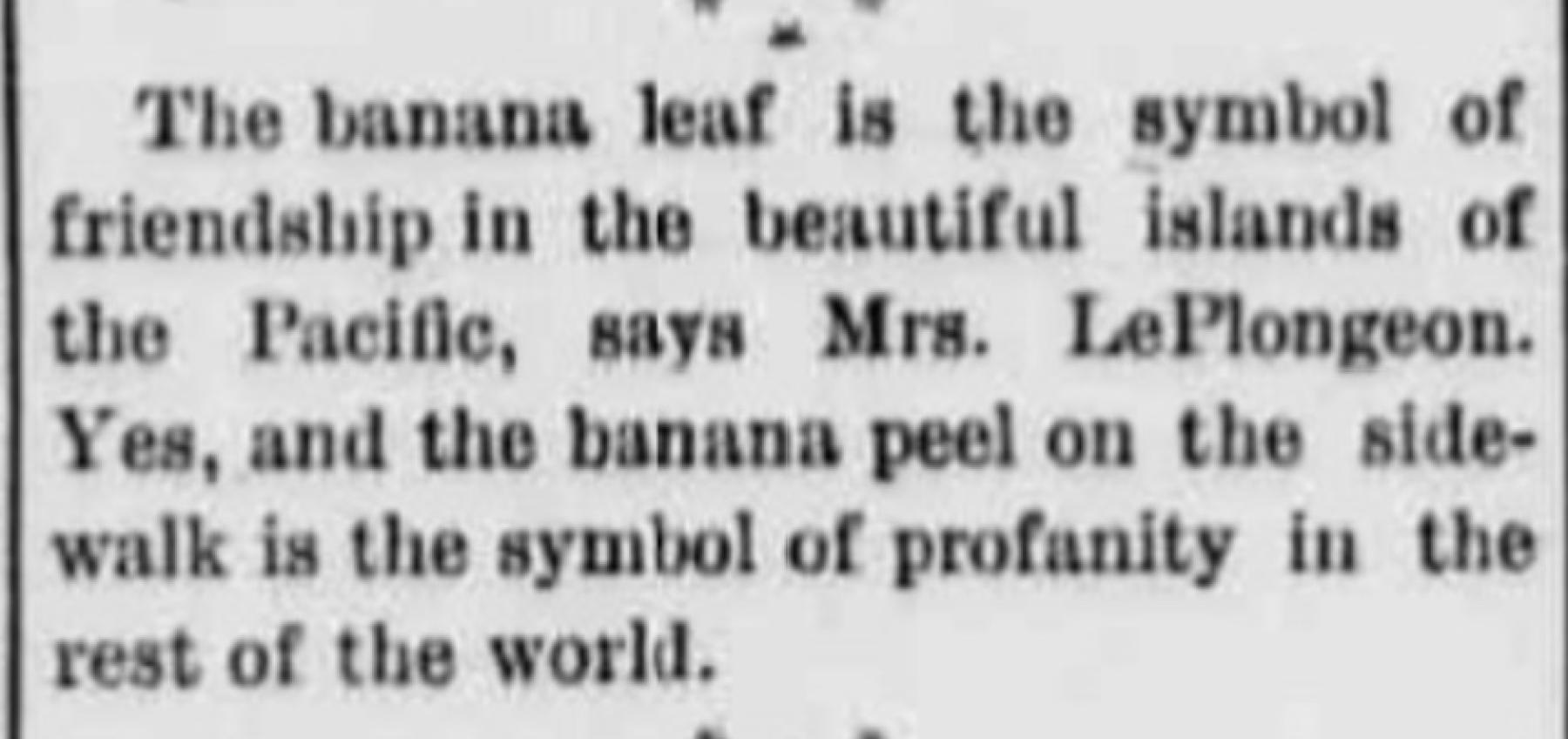
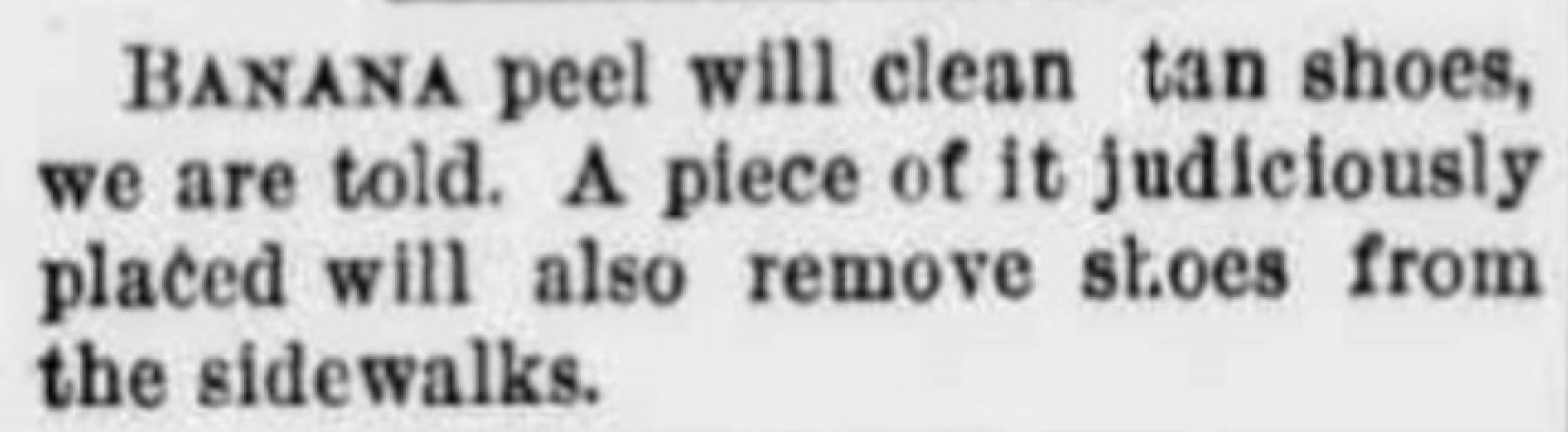
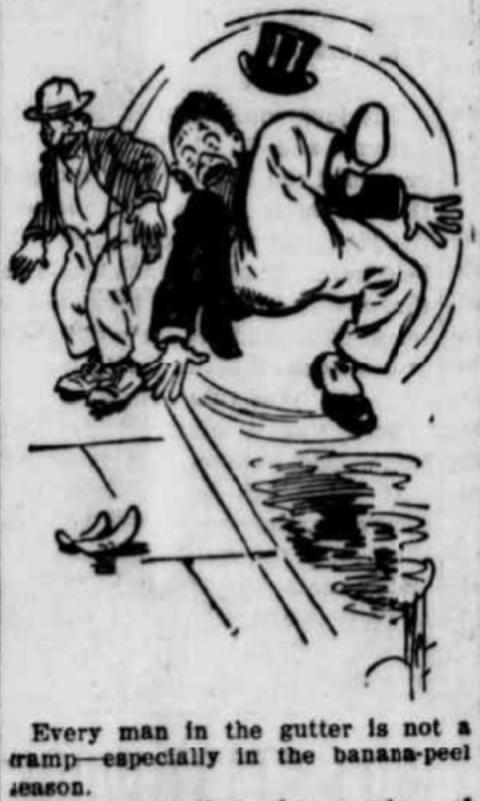
The gag of slipping on a banana peel is as old as the banana trade itself. It soon became an essential part of American slapstick comedy evolving from newspaper jokes to vaudeville acts, silent film bits, and is now a featured hazard in the Mario Kart video games.
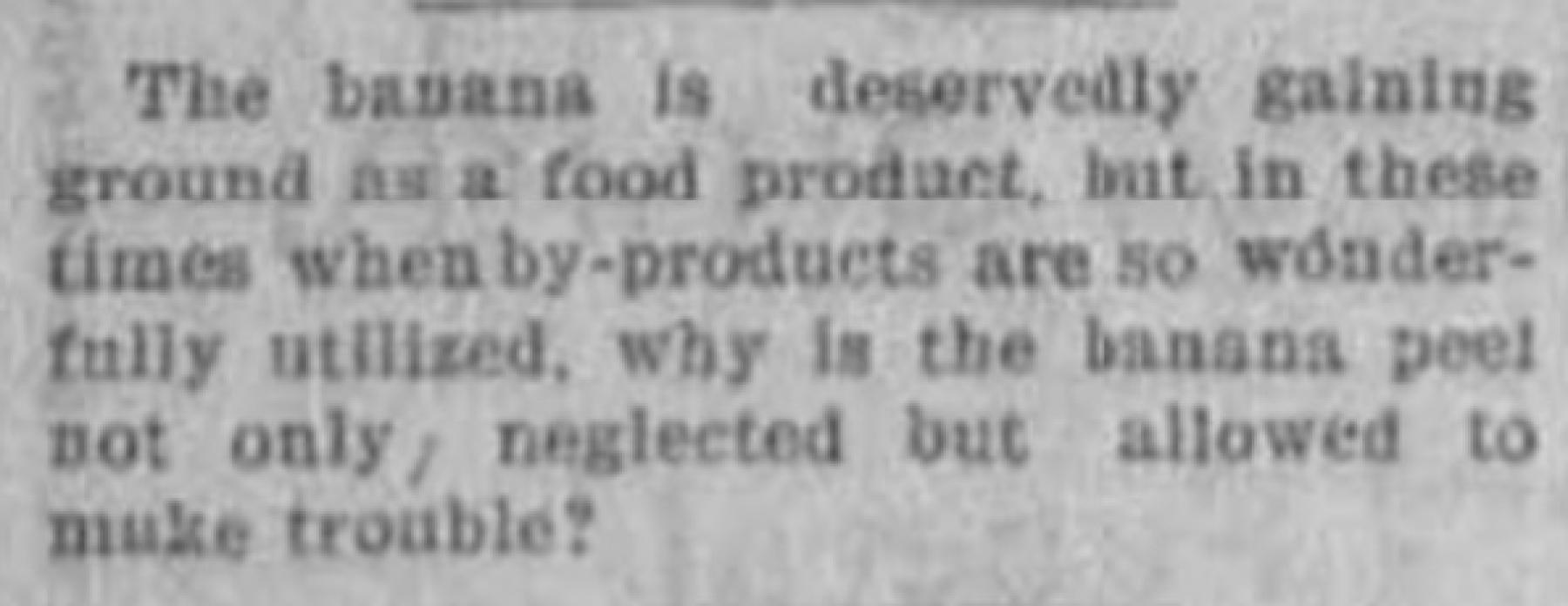
The gag poked fun at a real issue at the start of the banana trade. Banana sellers marketed the fruit as portable street food with an organic wrapper. Once eaten, peels were tossed on sidewalks and streets. Under the sun, a pile of rotting peels became a slippery sidewalk hazard. The black eyes and broken bones featured in early gags were apparently no exaggeration.
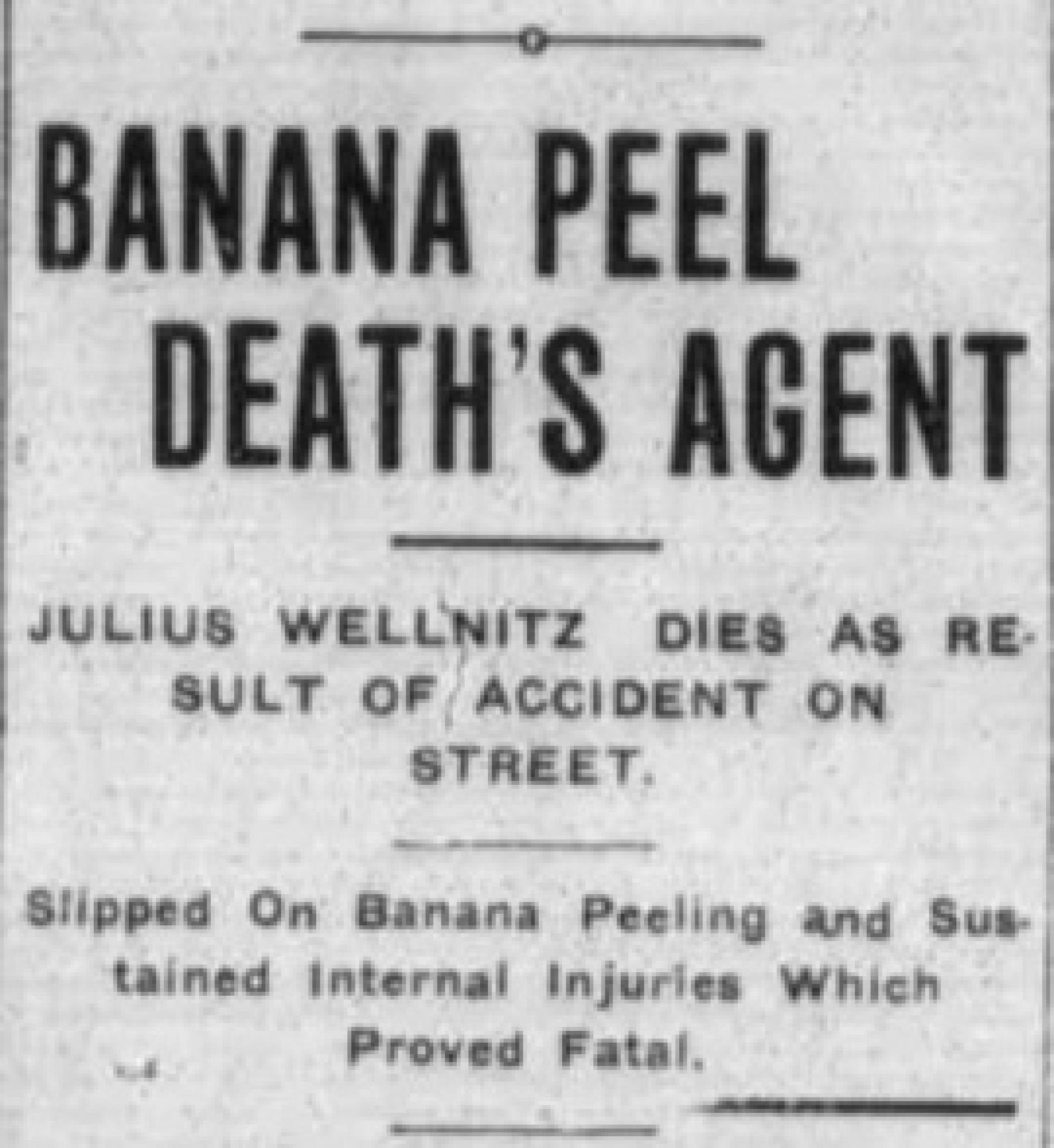
In 1905, the beloved caretaker of the Wyoming State Capitol, Julius Wellnitz, slipped on a banana peel and died two weeks later. The Cheyenne Daily Leader reported the story with a stark headline, “BANANA PEEL DEATH’S AGENT.”
Wellnitz and his family are the only people to ever live inside the Capitol building, in an apartment on the garden level. With a clothesline stretched across the Capitol lawn, the family called the seat of Wyoming’s government home. For over a decade, Wellnitz tended to the Capitol’s heating system and transformed the grounds into one of the most spectacular gardens in Cheyenne. His wife Mattie ran a lunch counter from her kitchen to feed hungry lawmakers who didn’t want to fight the winter weather to dine downtown during the legislative sessions. There is no record of her serving bananas. After Wellnitz succumbed to his banana peel injury, the Capitol Commission closed the building for business so the family could hold a funeral in their Capitol home.
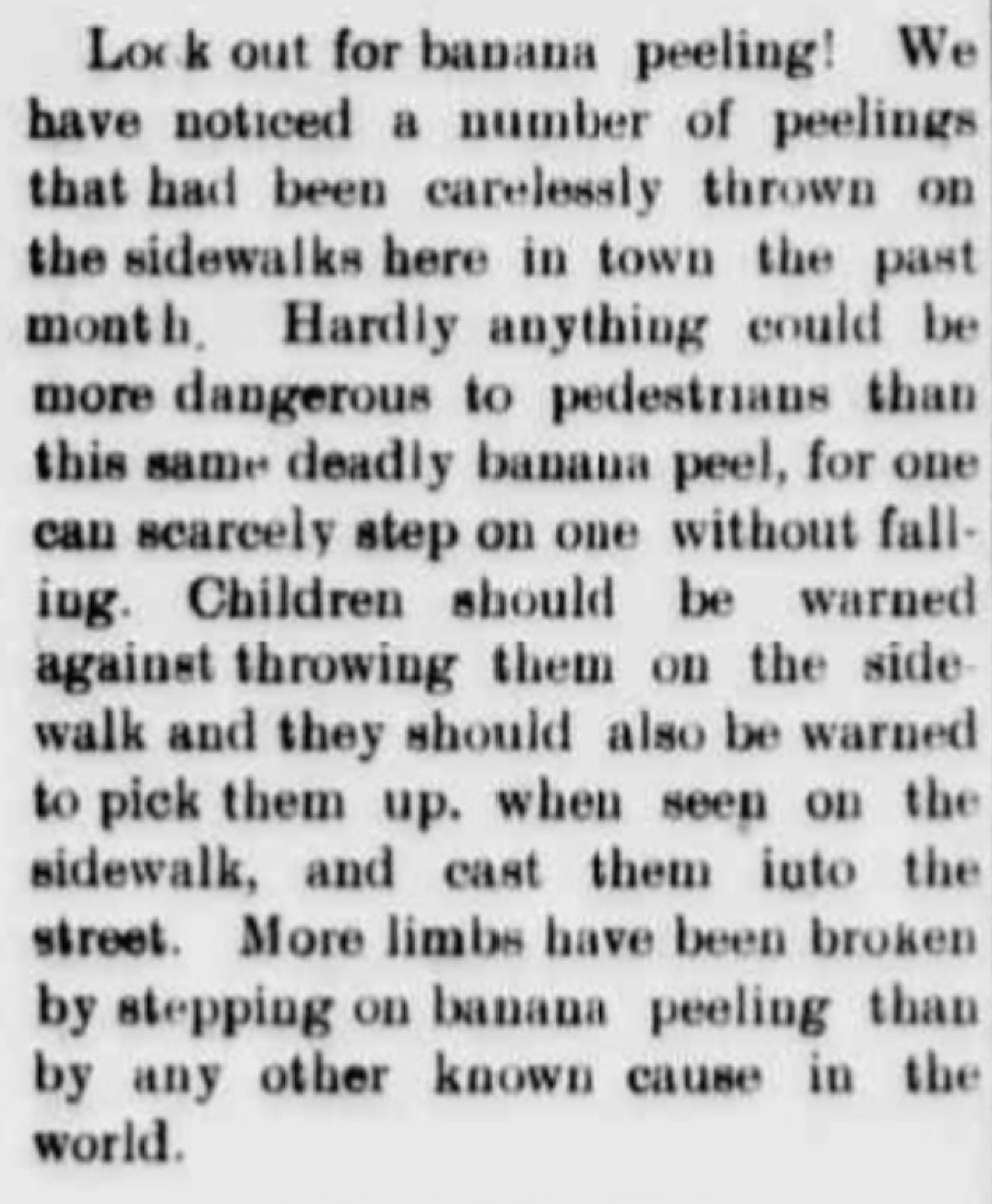
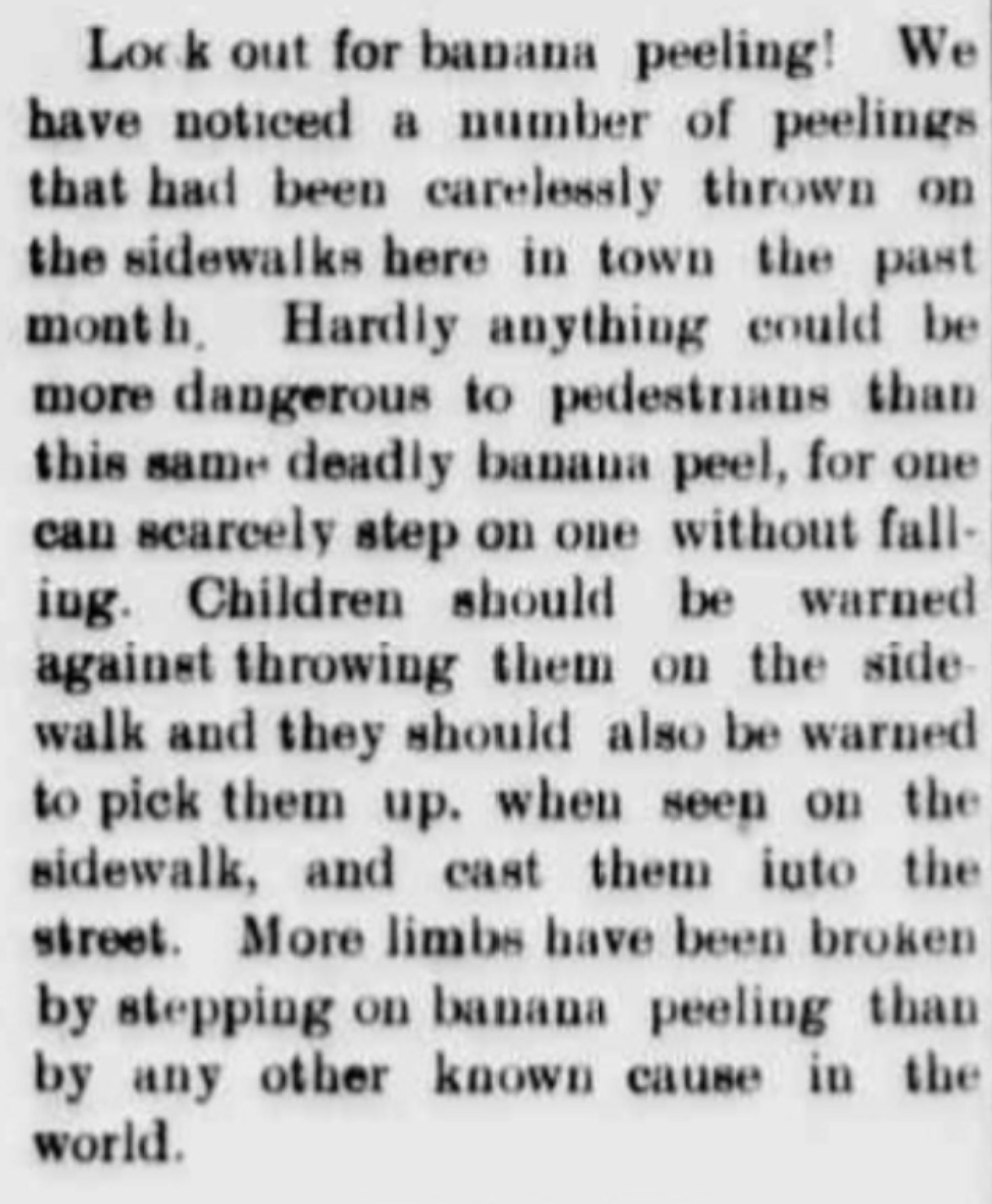
Wellnitz must not have been the only Wyomingite to be injured by a discarded peel. A year after Wellnitz’s fall, The Saratoga Sun issued a warning to readers about the “deadly banana peel.” Fifty years before Keep America Beautiful would launch their anti-littering campaigns, Wyoming newspapers were launching their own campaigns to keep their sidewalks clean and peel-free.
Historian Dan Koeppel cites the banana peel epidemic as the impetus for New York City’s public sanitation efforts. To fight the scourge of peels and other waste, Civil War colonel George Waring organized the city’s first street sweepers and public compost facilities in 1895. To change public attitudes about waste, Waring also organized the Juvenile Street Cleaning League, whose young members reported directly to him. The reports contain accounts of children confronting litterers and picking up banana peels by the dozens.
Children were recruited into anti-peel campaigns all across the country, including in Wyoming. The Saratoga Sun implored its readers to encourage children to throw any peels they found on the sidewalk into the street. Not quite the militant city sweepers of New York City. Still, Wyoming’s children often found themselves recruited into the early sanitation efforts from killing flies to picking up rotting peels.
The Franc brothers helped put bananas on American tables. It took the rest of the country—Wyoming’s children included—to figure out what to do with the peels.
So, if a banana turns up in a trick-or-treat bag this year, enjoy the treat—and spare your neighbors the trick.
Secondary Sources
- Virginia Scott Jenkins, Bananas: An American History (United States: Smithsonian Institution, 2000), https://archive.org/details/bananasamericanh00jenk/
- Dan Koeppel, Banana: The Fate of the Fruit that Changed the World (New York: Hudson Street Press/Penguin Group, 2008), accessed October 19, 2026, 66-67, https://archive.org/details/bananafateoffrui0000koep/
- Oliver Eller Irons, The history of the American fruit industry in the Caribbean (California: University of the Pacific Theses and Dissertations, 1929), https://scholarlycommons.pacific.edu/cgi/viewcontent.cgi?params=/context/uop_etds/article/1885/&path_info=Irons__Oliver_Eller___June_1929.pdf
- Laura Turner Garrison, “How Did Slipping on a Banana Peel Become a Comedy Staple?” Mental Floss, accessed October 19, 2026, https://www.mentalfloss.com/entertainment/how-did-slipping-banana-peel-become-comedy-staple
Related articles
Gallery: Wyoming newspaper jokes and warnings about bananas