New Founding Figure: Savino Lopez, a Voice for Wyoming’s Latin Americans
By the WyoHistory.org Team
WyoHistory.org’s Founding Figures project, part of the national America’s 250 commemoration, has a new addition: Savino C. Lopez, the Cheyenne civil rights leader who spent three decades building organizations that gave Wyoming’s Latino community a political voice.
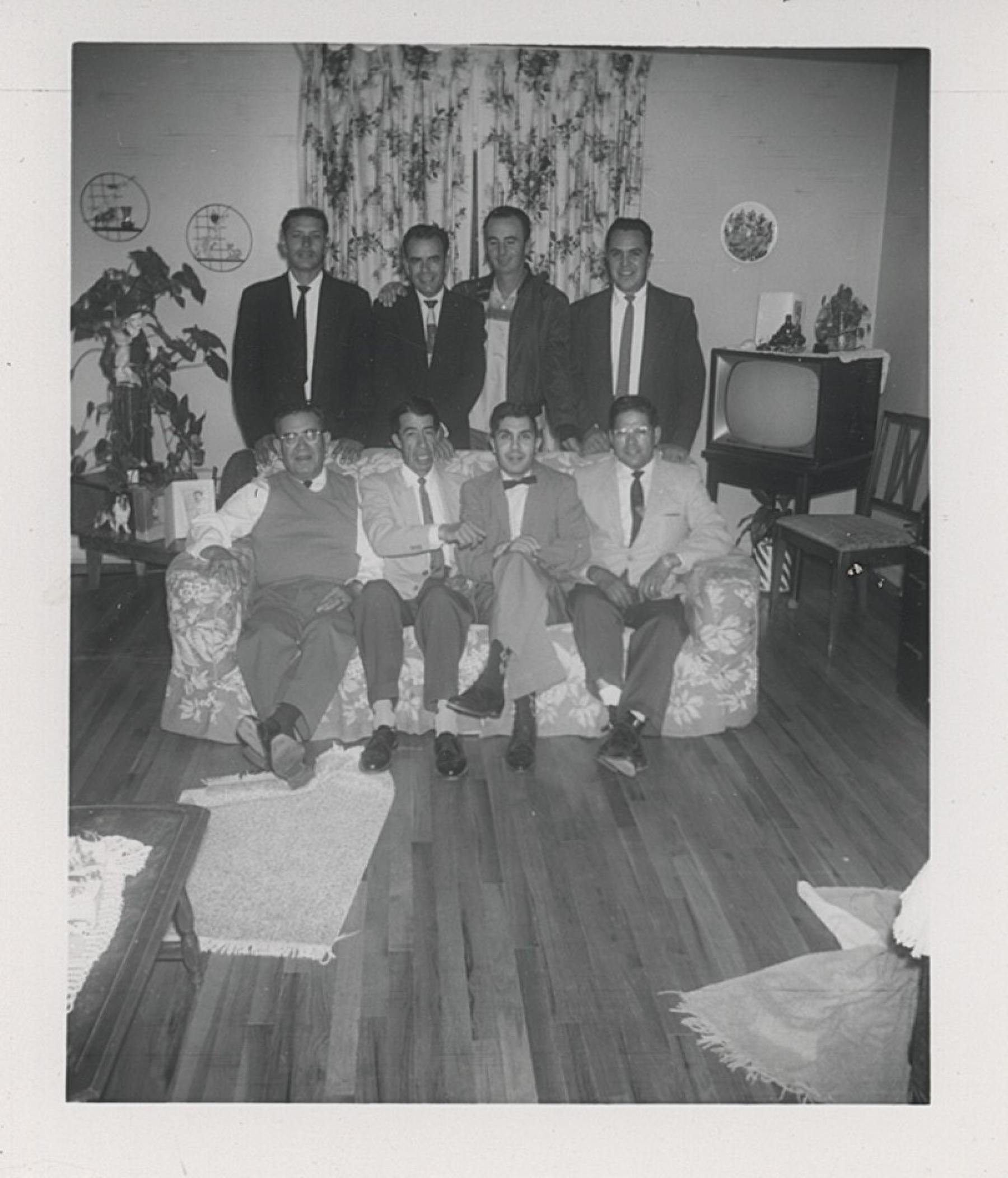
Lopez’s story, researched and written by his granddaughter Susanna Lopez, traces a remarkable arc: a thirteen-year-old boy in New Mexico Territory whose father is shot and killed in 1911, a farmer who works sugar beet fields in Colorado and South Dakota through the Depression, and finally, at age forty-five, a Cheyenne transplant who within five years becomes the founding president of the Latin American Association, Inc.
Over the next thirty years he would go on to found the Wyoming Federation of Latin American Groups and the National Latin American Federation, correspond with a sitting president, and push Wyoming toward the recognition of civil rights his community had long been denied.
A story that surfaced sixty years later
Some of the most vivid details about Lopez’s life never made it into the archival record until his granddaughters, Sue Lopez and Cynthia Richmond, shared them in a 2024 talk at the Wyoming State Archives. One story stands out. In 1996, a Ku Klux Klan rally on the steps of the Wyoming State Capitol prompted Lopez’s daughter, Josephine, to finally tell her children something she had witnessed firsthand as a girl decades earlier: Klansmen arriving at the family’s farmhouse in Newell, South Dakota, in the early 1930s, and beating her father.
It’s a sobering reminder that the Second Ku Klux Klan’s reach in the 1920s and ‘30s extended well beyond the Wyoming towns where WyoHistory.org has documented its activity, including Casper, Sheridan, and Cheyenne. Lopez’s encounter with the Klan happened a decade before he ever set foot in Wyoming, on a farm hundreds of miles away. But it belongs to the same wider story: a nativist movement that, as our KKK article shows, found fertile ground across the rural West by targeting Catholics, immigrants, and anyone who didn’t fit its definition of “One Hundred Percent American.” For Lopez, the violence he and his family endured in South Dakota came years before the discrimination he would spend the rest of his life organizing against in Wyoming.
Building a movement with a typewriter and a party line
Asked what surprised them most while researching their grandfather’s life, Sue Lopez pointed to something easy to overlook: the sheer logistics of it. Lopez built a federation spanning six states, with chapters from Seattle to Fort Morgan, Colorado, using a manual typewriter, handwritten letters, and a wall telephone with a long cord. There was no email and no cell phone, and, as his granddaughters noted, only a tenth-grade education behind it all. “This man just kept moving and climbing,” Sue said, “and he really did it for other people.”
That combination, a family history of hardship met with an unwavering insistence on organizing, communicating, and bringing people together, is exactly what makes Savino Lopez’s addition to the Founding Figures project matter. His is a Wyoming story that began far from Wyoming, and one that, until recently, lived mostly in family memory rather than the historical record.
Read the full Savino Lopez article on WyoHistory.org here, and explore the rest of the Founding Figures project here.