Rephotographing Thomas Jaggar’s Images of the Absarokas
By Brian Beauvais
All historic photographs courtesy of the U.S.G.S. Field Records Library, Denver, CO, and the Yellowstone National Park Research Center, National Park Service. Modern rephotographs by Brian Beauvais.
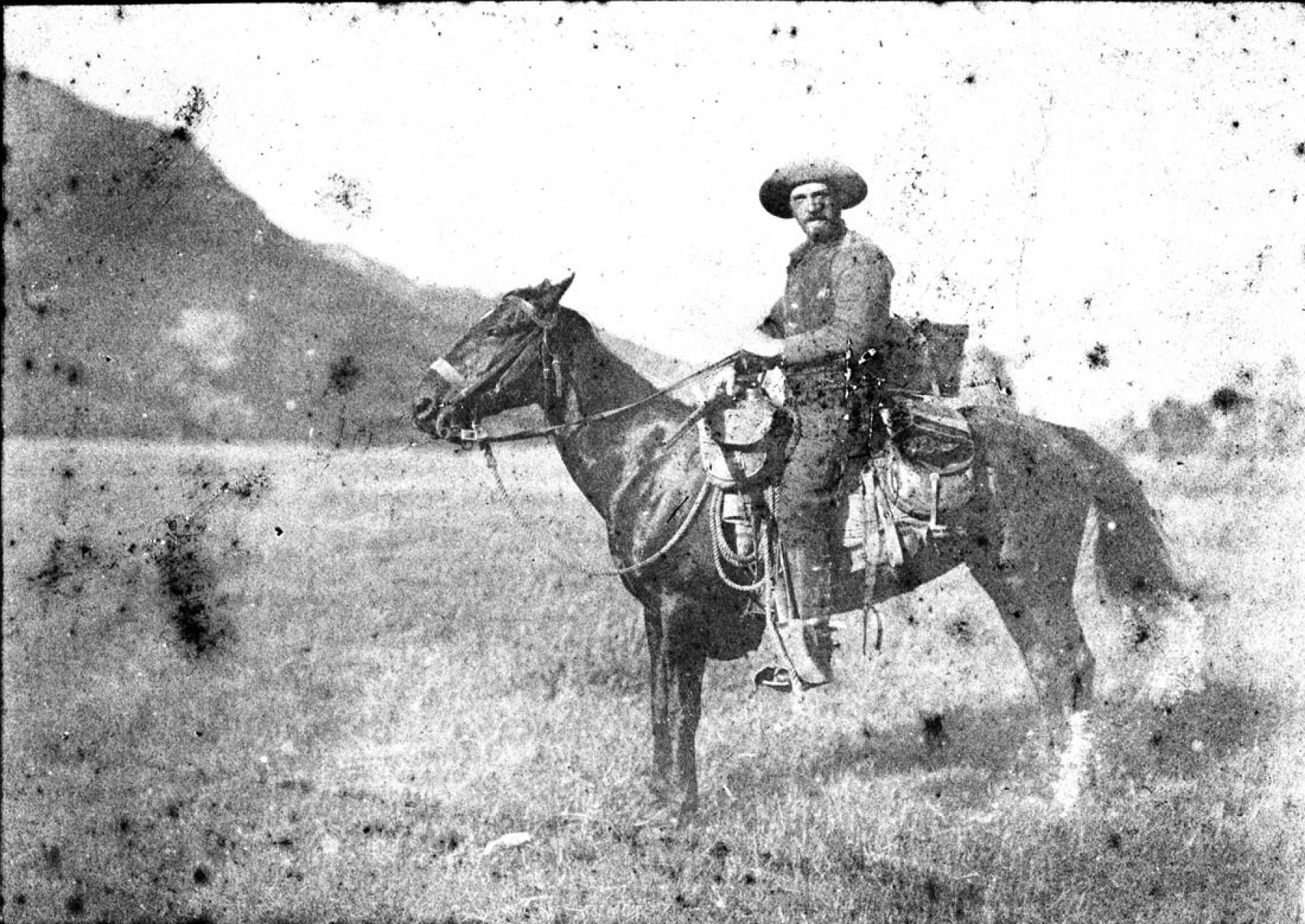
Finding Jaggar
Years ago, I first encountered a book of Thomas Jaggar’s diaries from 1893 and 1897 that had been edited and published by Bruce Blevins. I was fascinated by the places and people Jaggar mentioned during his summers exploring the geology and geography of the Absarokas for the U.S. Geological Survey. I was also enthralled with many of the photographs Jaggar captured on his journeys. As a local history archivist, I loved seeing such early views of landscapes I spent so much time studying. Jaggar’s photographs were some of the first-known images taken of some of these areas—and so were deeply interesting.
As I hiked and explored around the many peaks, valleys, and plateaus of the Absarokas, it occurred to me that I was visiting many of the same places as Jaggar from long ago. With his photographs in the back of my mind, I also realized many of these photo locations were in places I either frequented on my outings, or longed to visit in the backcountry. But although I had the Blevins book, I still lacked the entirety of Jaggar’s Absaroka photos, or the ability to carry these images into the field.
In March 2020, I visited the U.S.G.S. Field Records Library at the Federal Center in Denver, Colorado. There I coordinated with Jenny Stevens, a librarian in charge of the photographic collection at the facility, to acquire digital copies of Jaggar’s photos and paper copies of his journal and field notes in their entirety.
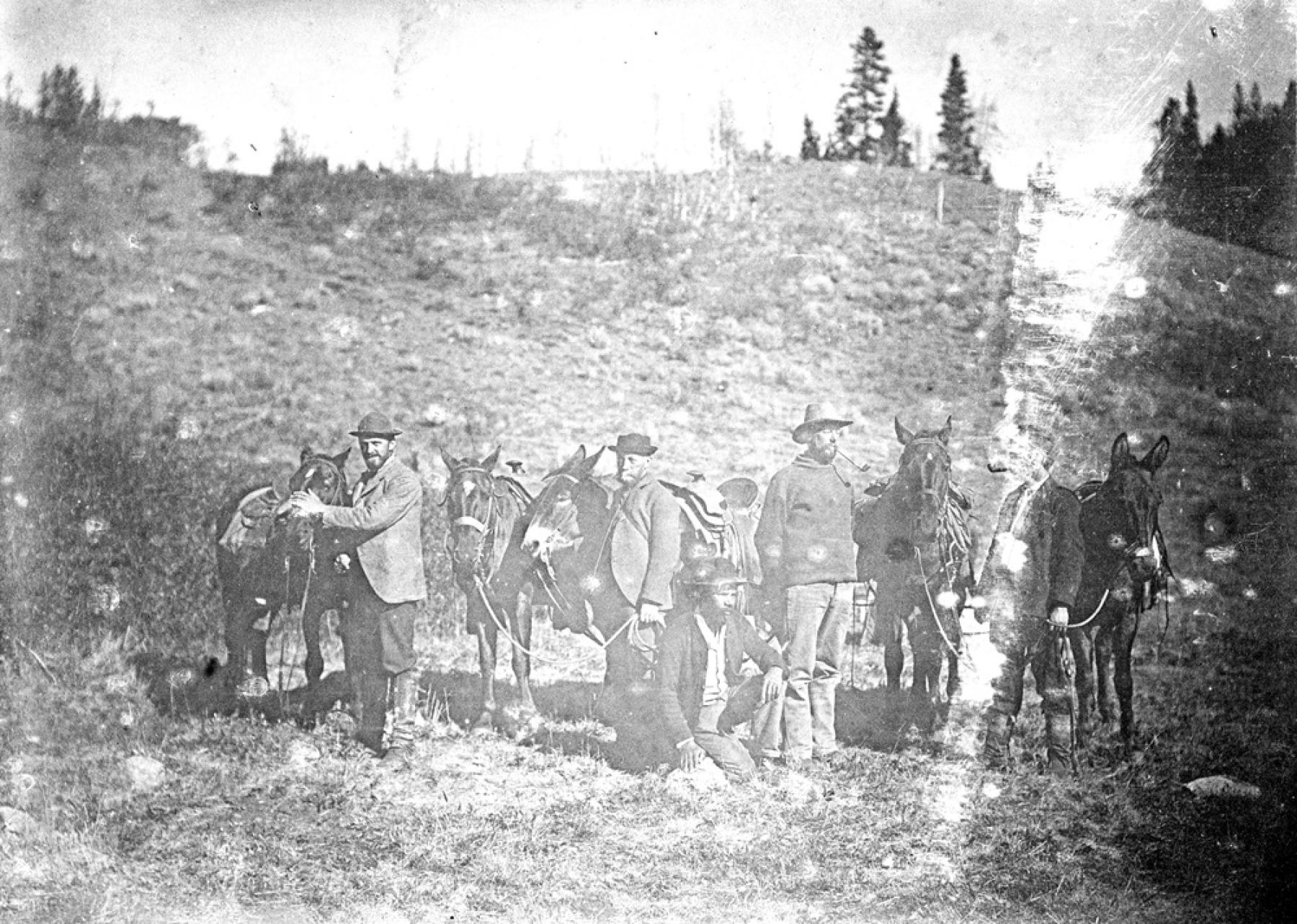
In summer 2020, I began a personal project of “recreationally” rephotographing Jaggar’s images—as many as I could reach by day hikes. With copies of the photos in hand, I set out to pinpoint as best I could the exact locations where Jaggar had captured these images. I was able to locate the vantage points of a number of the photo locations during these day hikes, but many of the locations were too remote to access in a day’s walk. To capture these photos, I knew a longer expedition would be needed.
In 2024 and 2025, I received a grant from the Wyoming Historical Society’s Lola Homsher Endowment Fund. These funds helped secure the services of Meade Dominick and 7D Ranch Outfitting. In August 2024, we set out on a six-day trip up the South Fork of the Shoshone River to the continental divide at the head of Marston Creek, then to the headwaters of the Yellowstone River, and into the Thorofare drainage—the most remote, roadless area in the contiguous United States—ultimately traveling back to the South Fork.
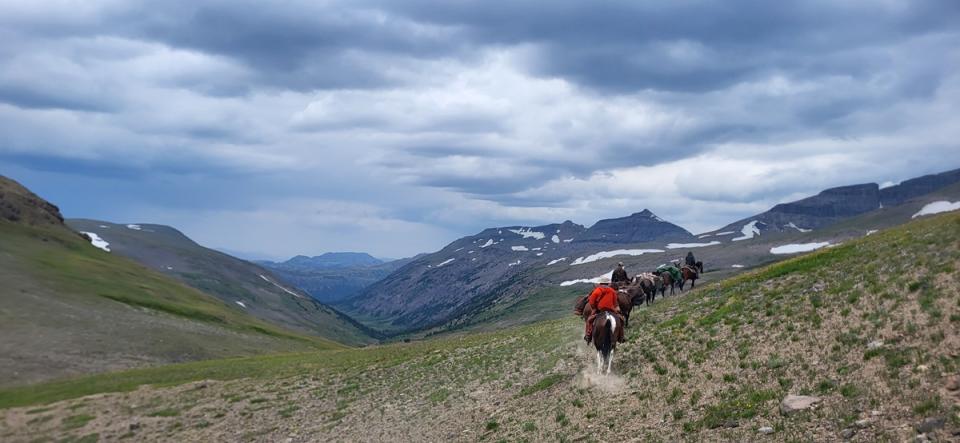
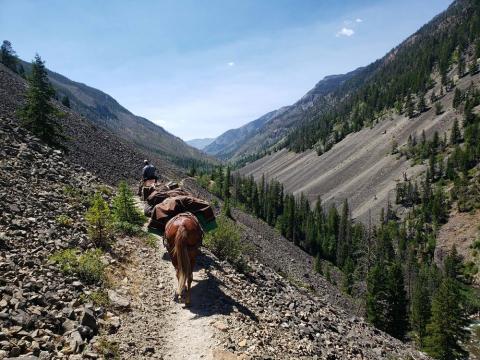
Our route covered sizable sections of Jaggar’s 1893 and 1897 routes and allowed me to access some of his most picturesque and remote photo locations. We undertook a similar but more ambitious outing in September 2025, again thanks to funding help from the Homsher fund. We rode over 100 miles in nine days—long days in the saddle indeed—traversing the length of the upper Yellowstone River and Thorofare Creek. This second outing again allowed me to pinpoint some of Jaggar’s photo locations in extremely remote areas of Wyoming’s wilderness.
Rephotography Process
To pinpoint the exact location of Jaggar’s photos, I began by studying the wider landscape visible in the backgrounds. These starting points provided a general idea of the perspective and helped me gauge a rough estimation of the area in which each photo was taken. I performed most of this initial “scouting” in the comfort of my office using Google Earth or onX software, which helps facilitate geographic exploration using modern satellite imagery. Because Jaggar took most of his images in backcountry areas far from roads or existing highly photographed locales, his photos often lack existing views with which to compare. This set of circumstances always necessitated personal visits to actual sites to accurately find precise photo locations.
Once a general area of a photo site had been determined from the image’s background, I then visited the general location to scout out the perspectives in the field. Holding copies of Jaggar’s images in my hands, I could move around on the landscape until I felt certain I had found the correct perspective. Sometimes changes in the landscape [i.e., tree growth, private property restrictions, or my physical safety] hindered my ability to acquire the exact perspective as those found in Jaggar’s photos.
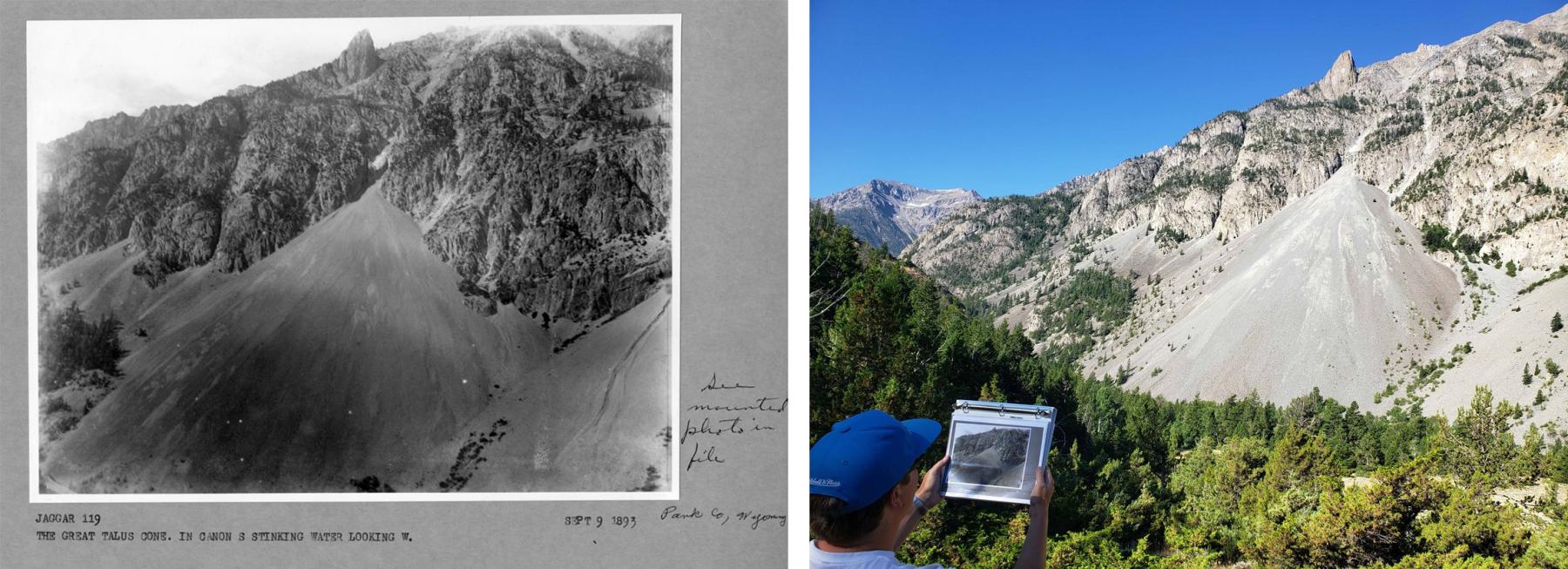
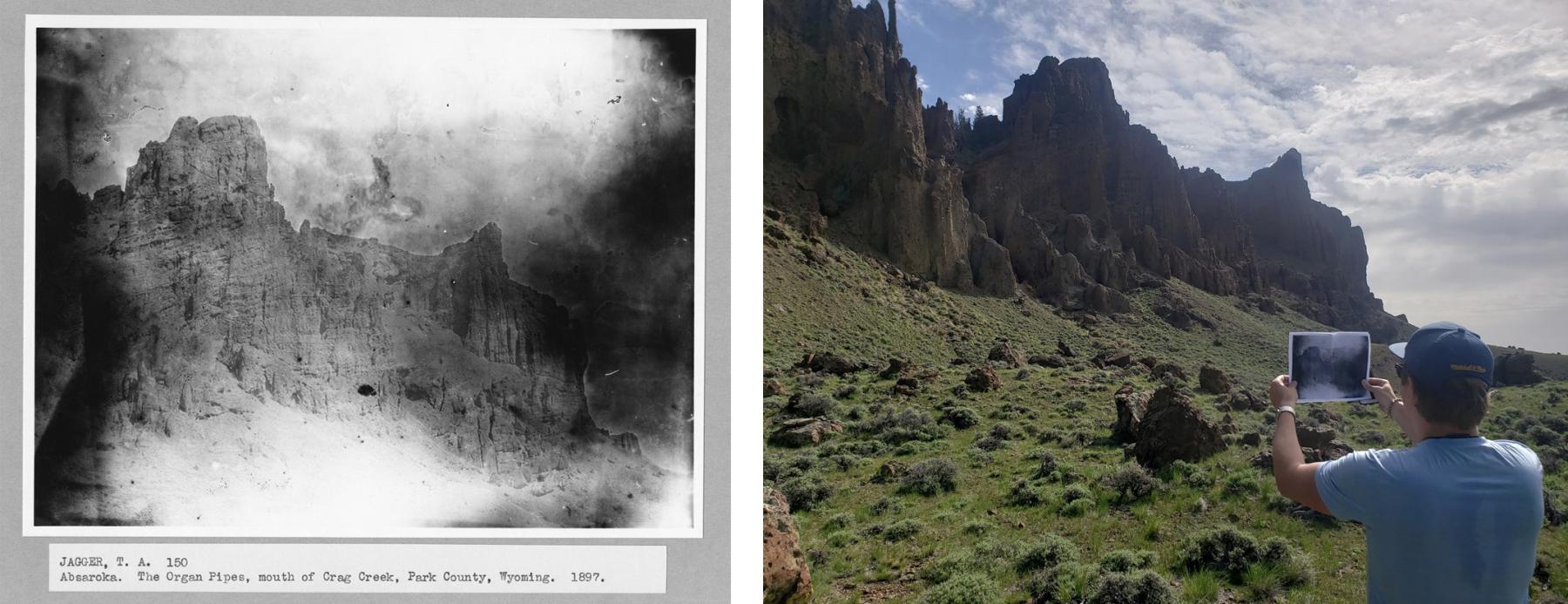
When I found a perspective in the field, I then shifted my attention to the foreground of Jaggar’s photos to determine exact camera locations. Sometimes certain aspects of Jaggar’s foregrounds could be ascertained in the present day, such as boulders, cairns, or old tree limbs. In other cases, landscape changes or lack of discernable clues made finding a precise foreground an impossibility, in which case I simply had to do my best to try to find the best photo perspective possible given the circumstances.
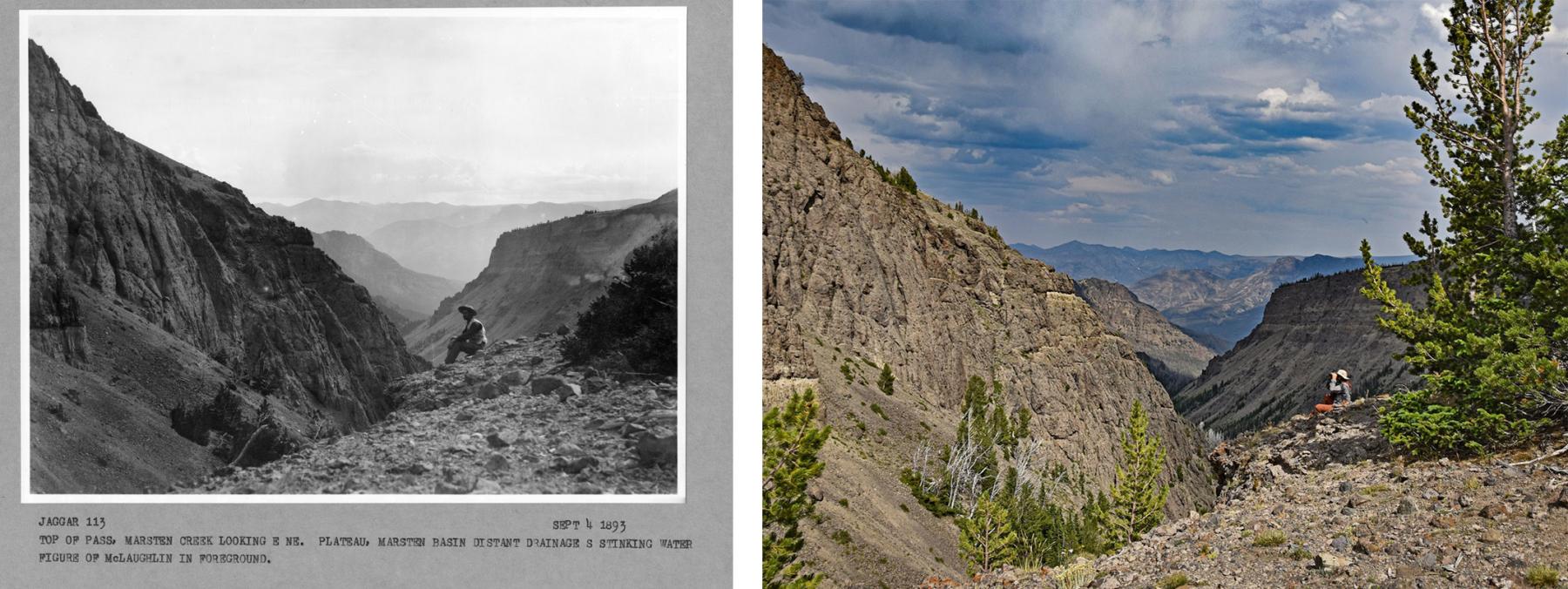
Once I satisfied myself that I had sited one of Jaggar’s photos to the best of my abilities, I captured a series of photos from that location—sometimes using a tripod, sometimes foregoing a tripod given the often long and arduous hikes required to reach the site in the first place. Using a DSLR camera, I tried to match the vantage point of Jaggar’s original images as closely as possible. Of course, I had to be able to capture Jaggar’s original field of view with my own camera, but for modern wide-angle lenses that was no problem.
Locating an image perspective and visiting the site in the field was sometimes a huge endeavor of time and energy. Some of Jaggar’s images were taken 20 to 30 miles from the nearest road—sometimes far off any existing modern trails, requiring bushwhacking and extensive off-trail travel over often difficult terrain. Moreover, once at a photo site I often lacked the luxury of waiting for the exact lighting conditions or angle of the sun needed to replicate an original photo precisely. Given the plethora of variables entailed with working in the backcountry, I focused most intently on matching components of the landscape that remained permanent, as opposed to transitory light conditions or weather.
Changes on the Landscape
In comparing Jaggar’s photographs from 1893 and 1897 with those of my own from the duration of this project—2020 through 2025—a handful of notable differences in the landscape are evident.
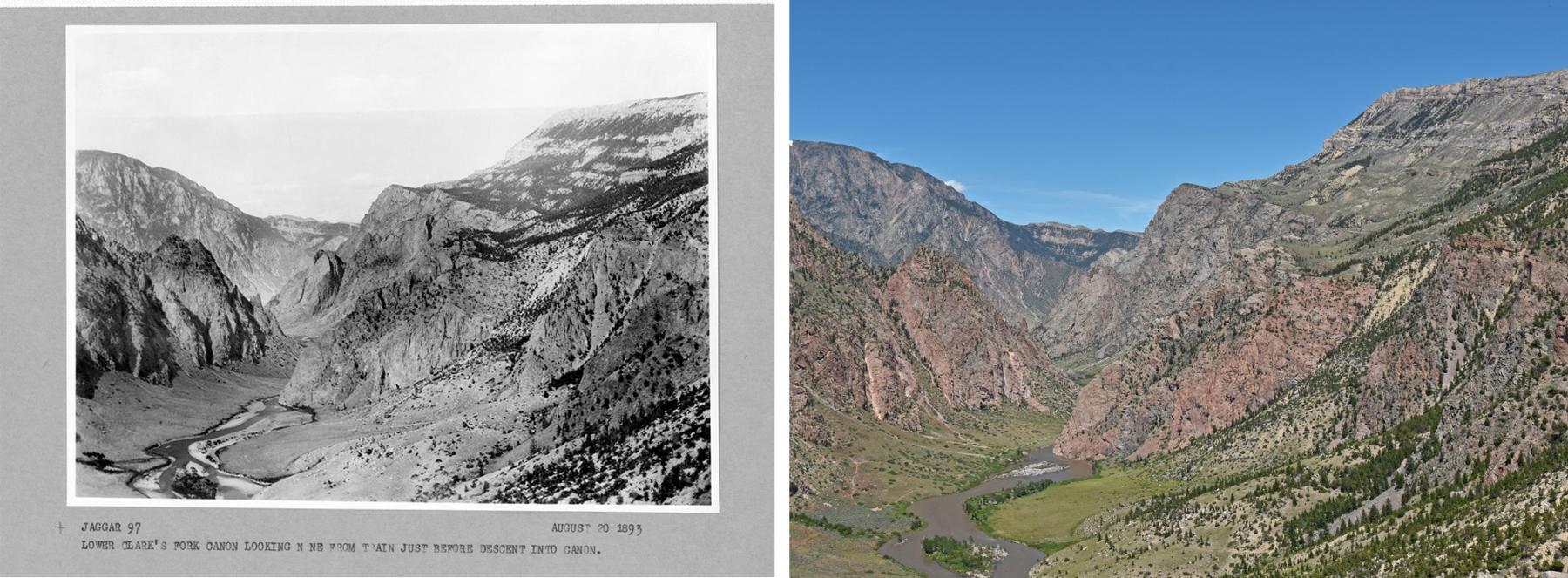
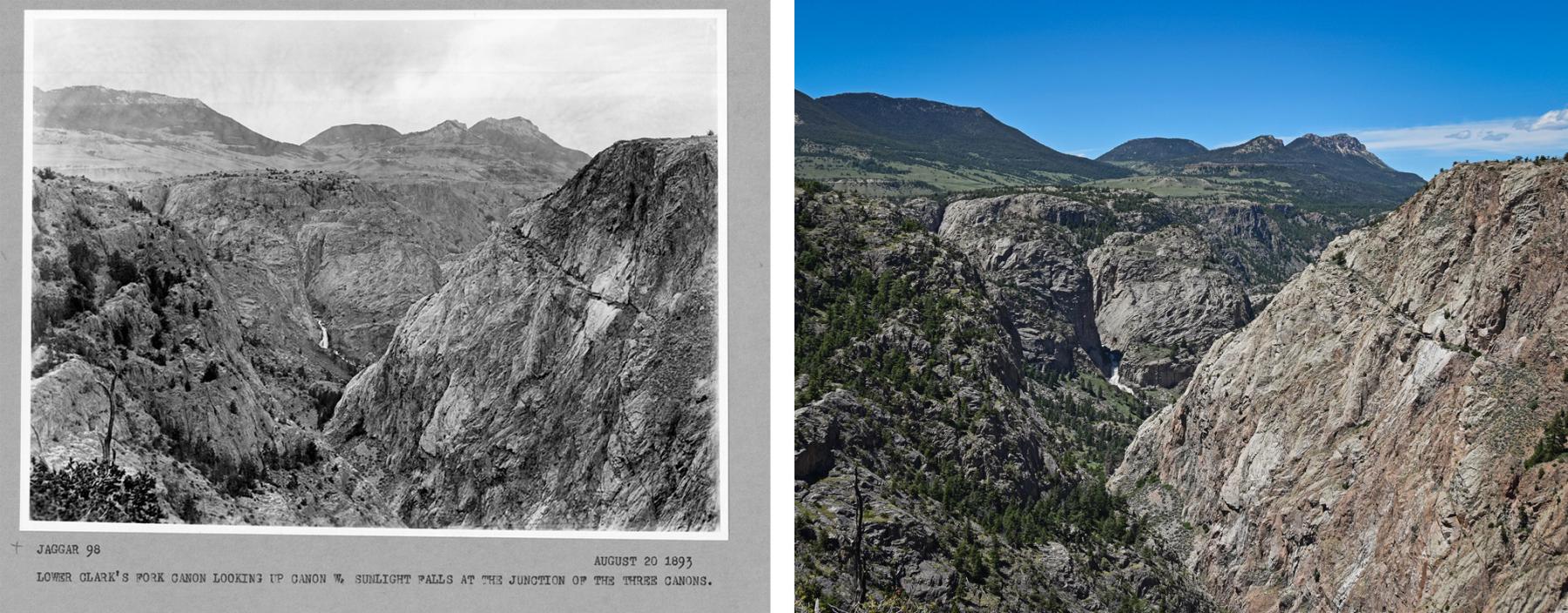
Perhaps the most observable change is that known as “conifer encroachment,” a trend observed widely in sagebrush and alpine environments across the American West. From juxtaposing the photos from this project, it is clear that forest edges have greatly encroached into meadows and grassy hillsides, sometimes as much as an estimated 200 yards. This change is manifest in images 98 and 99, where the mountain slopes above the Clarks Fork Canyon—more precisely on the north-facing slope between Sunlight and Russell creeks–have greatly filled in with forest cover, expanding the extent and concentration of trees.
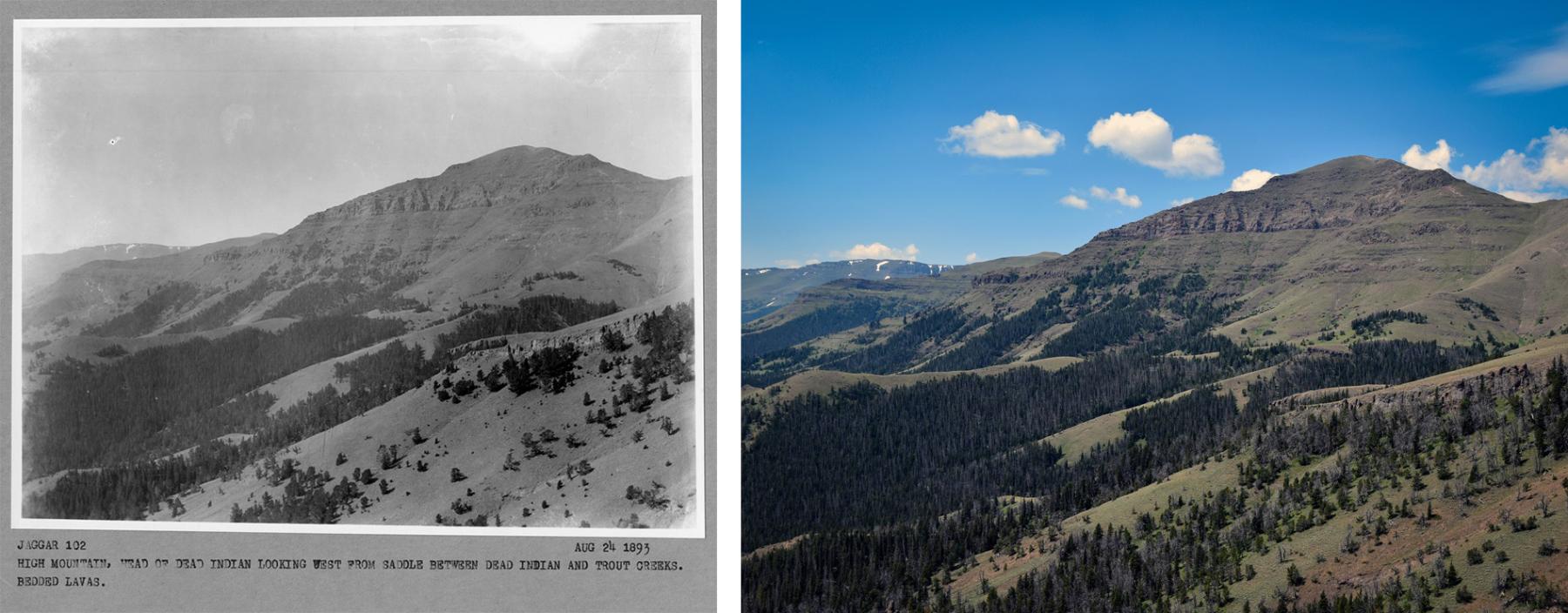
Another example of this forest expansion is evident on the slopes east of Trout Peak, where image 102 exhibits a proliferation of forest cover at the head of Sheephead Creek.
While evidence of expanding forest footprints was apparent in some photos, the increased density of tree cover was even more common. Image 111 shows evidence of an extensive increase in forest density, as well as broadened footprint, along Rattlesnake Creek west of Cody, Wyoming—an area that has seen intensive livestock grazing over the past century. But it is interesting to note that this increased tree density is also easily perceptible in locations removed from the pressures of historic and modern livestock grazing.
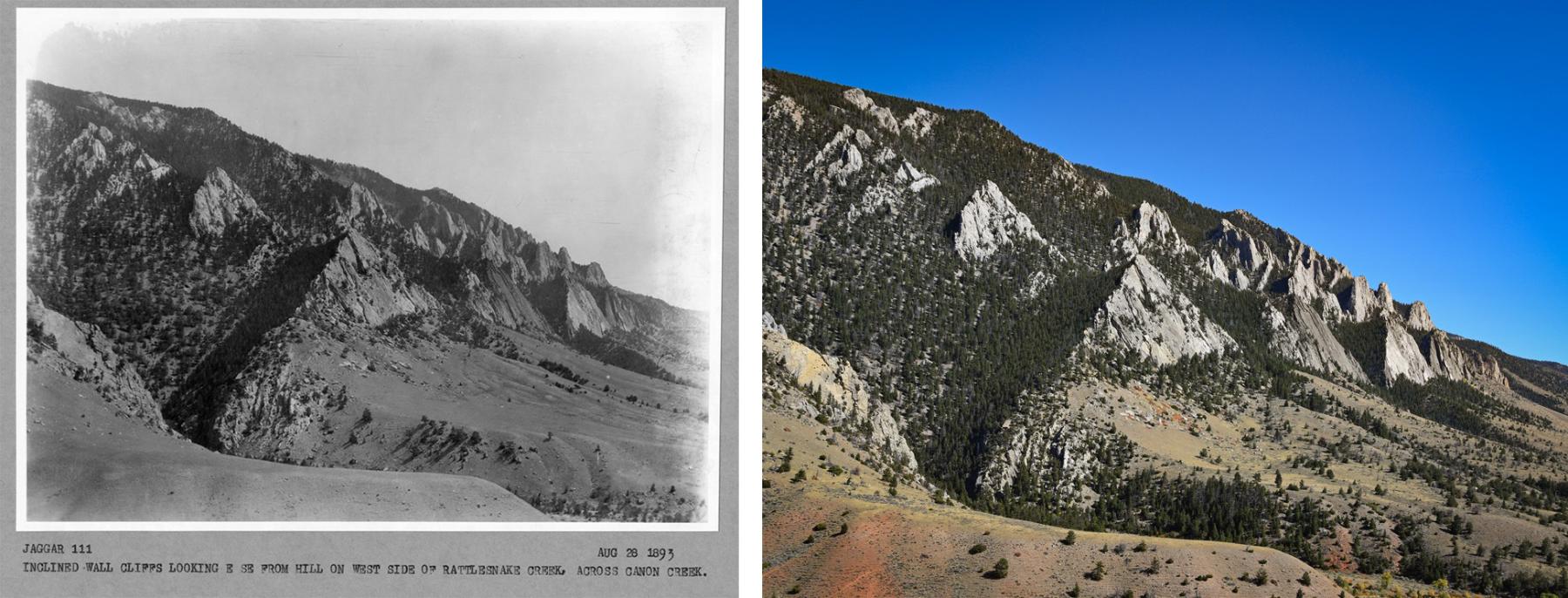
Much of what can be seen in comparing these historic photos with modern views is what is called “infill”—trees transforming a place from an open meadow or sagebrush environment with only a few trees per acre to a fully forested woodland – a component of the larger “conifer encroachment” phenomena. Studies suggest this growth of forest footprint and density is the result of grassland fire suppression and amplified grazing, which reduces grasses that act as fuel for these grassland fires, among a variety of other factors that remain less well understood.
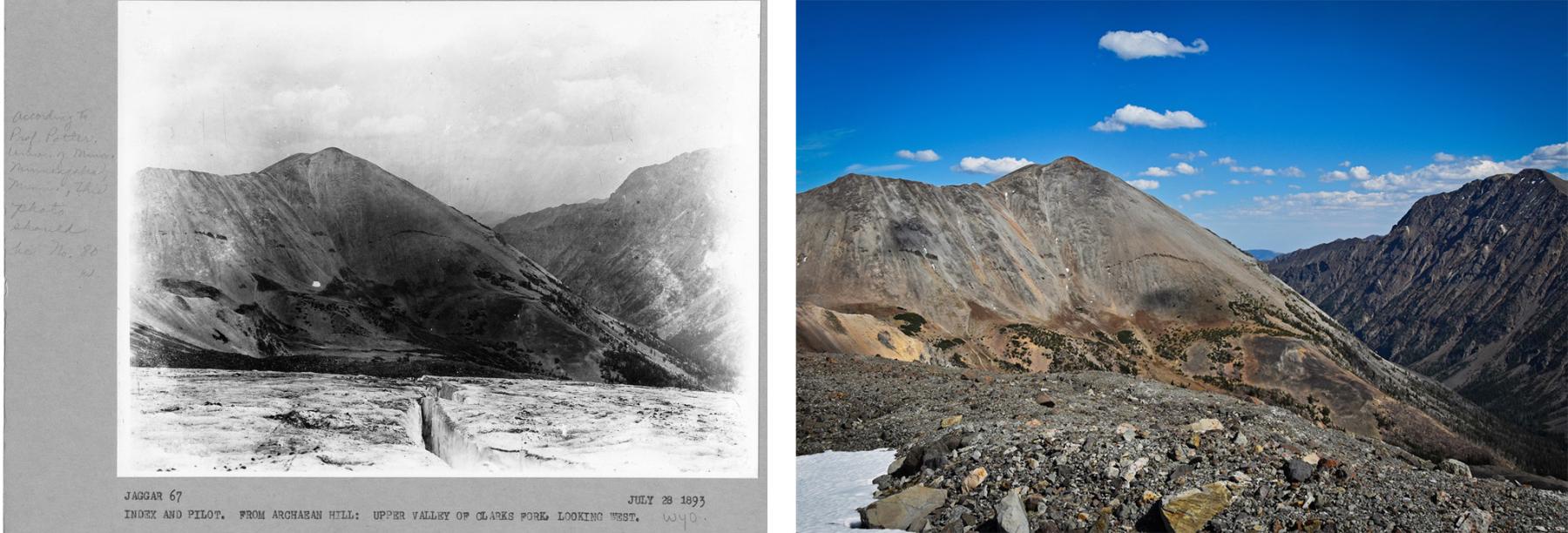
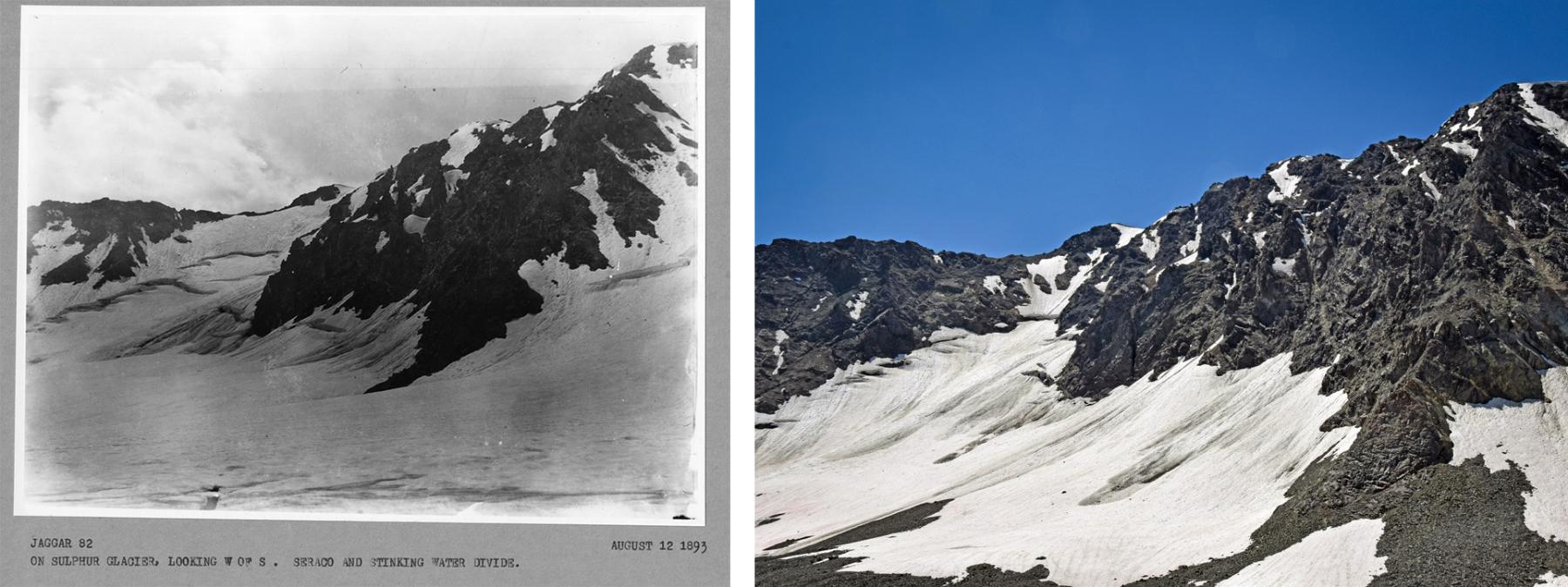
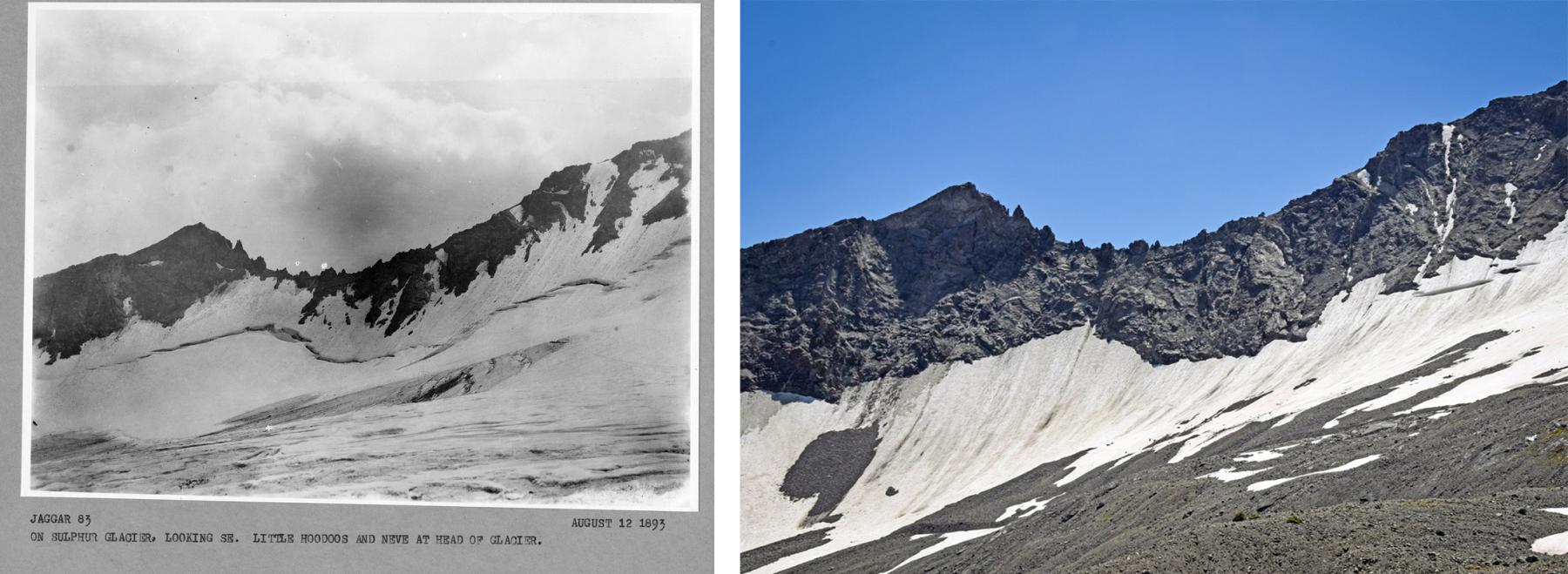
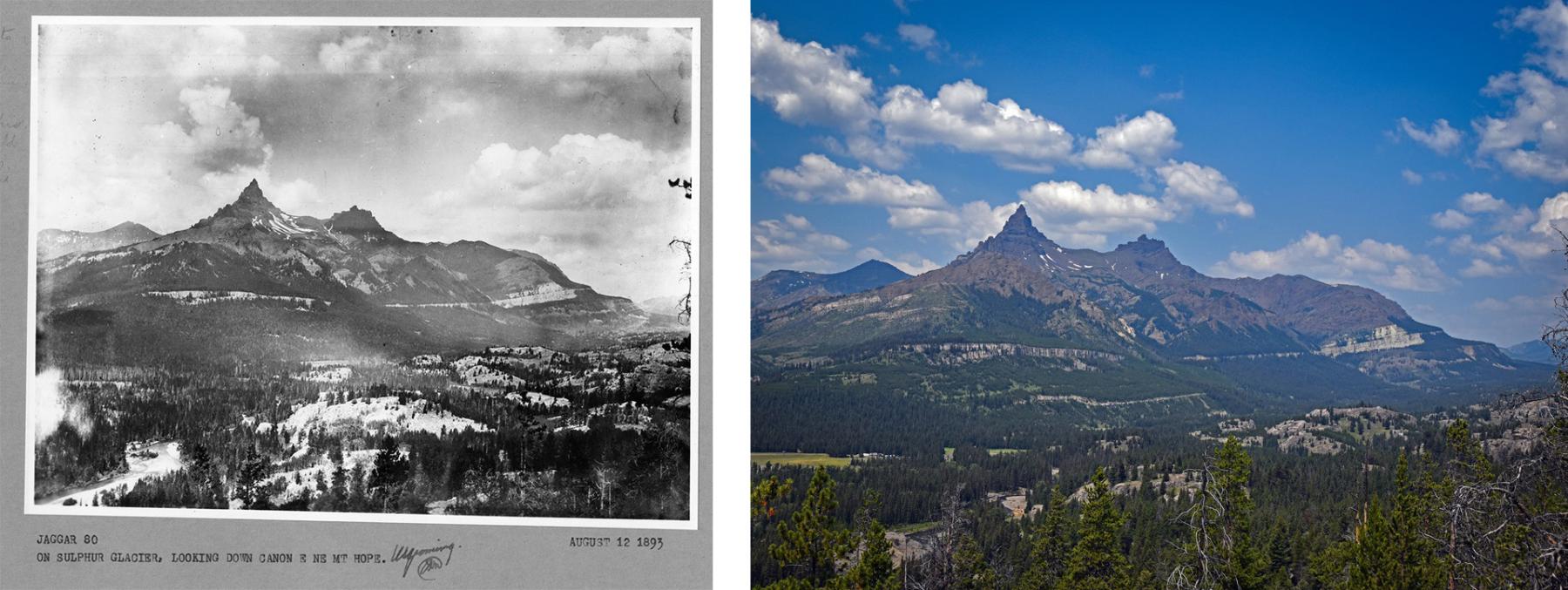
A more stark and concentrated contrast revolves around the Sulphur Creek Glacier at the base of Sunlight and Stinking Water peaks in the upper Sunlight Creek drainage. On August 11, 1893, when Jaggar photographed the glacier and large valley below, he climbed atop actual glacial ice at the head of the cirque. These include images 67, 82, and 83. Many of the perspectives Jaggar attained are impossible to exactly replicate in the modern day because Sulphur Creek Glacier currently only exists as a rock glacier—or an ice-cored glacier—with only a tiny bit of dirty and exposed glacial ice hugging the north-facing headwall. This means that the ice portion of the glacier is now wholly covered by rock debris, whereas in Jaggar’s day an exposed and active ice glacier of indeterminable but substantial thickness overlaid the upper portions of the now totally exposed rock glacier.
Landscapes are dynamic and ever-changing. There is no “correct” or “original” fixed state that the ecosystems should be judged against. Jaggar’s images from the 1890s are merely snapshots of natural areas that were, and still are, in a constant state of flux.
I hope what this rephotography project can demonstrate is the remarkable extent that many of our mountain landscapes have maintained their natural state in a world otherwise characterized by extensive human development. And beyond the illusory goal of protecting “pristine” landscapes, what might be more important is our efforts to defend the natural processes that keep these ecosystems healthy—clean water, fresh air, wildlife habitat, and thoughtful human development that does not wholly destabilize the integrity of the environment in which we all live.