“We Will Remain Out of the Union”: Wyoming, Woman Suffrage, and the Fight for Statehood
By WyoHistory.org Team
On July 10, 1890, President Benjamin Harrison signed the bill admitting Wyoming as the 44th state in the Union. Across the young territory, people celebrated. Guns fired. Telegrams flew. Wyoming was, at last, a state.
Today, many Wyomingites do not realize how close the whole thing had come to falling apart, and why.
The trouble was not money. It was not geography. It was not even the perennial worry about Wyoming’s small population, though that was a real concern. The sticking point in the halls of Congress was women.
The push for statehood started in the 1880s, with Wyoming’s territorial legislature passing a memorial in 1887 directing the state’s non-voting congressional delegate to push for statehood. The US Senate committee on the territories would not pick up the call for statehood until 1889, when it presented Senate Bill 2445. While it was put on the calendar, Congress failed to consider the bill for Wyoming’s statehood during that session.
Convinced that if Congress had enough time, Wyoming would already be a state, commissioners from seven out of the ten Wyoming counties petitioned the governor to call for a constitutional convention. The governor’s June proclamation called for an election of delegates on July 8, 1889.
Wyoming had recognized women’s right to vote in 1869, more than fifty years before the Nineteenth Amendment would extend that right to the rest of the country. Yet, when it came to statehood, many were worried that Congress would not accept Wyoming with her women. A rumor quickly spread that woman suffrage would be left out of the new constitution.
The prominent women of Cheyenne swiftly organized a rally for June 15th. The rally of 100 women was presided over by Amalia Post, one of the first women to serve on a jury in the United States and the Vice President of the National American Woman Suffrage Association. The women passed resolutions praising territorial suffrage and calling for voters to only elect pro-suffrage delegates. The effort was successful. Of the 55 delegates to the convention, only Louis J. Palmer from Sweetwater County was opposed.
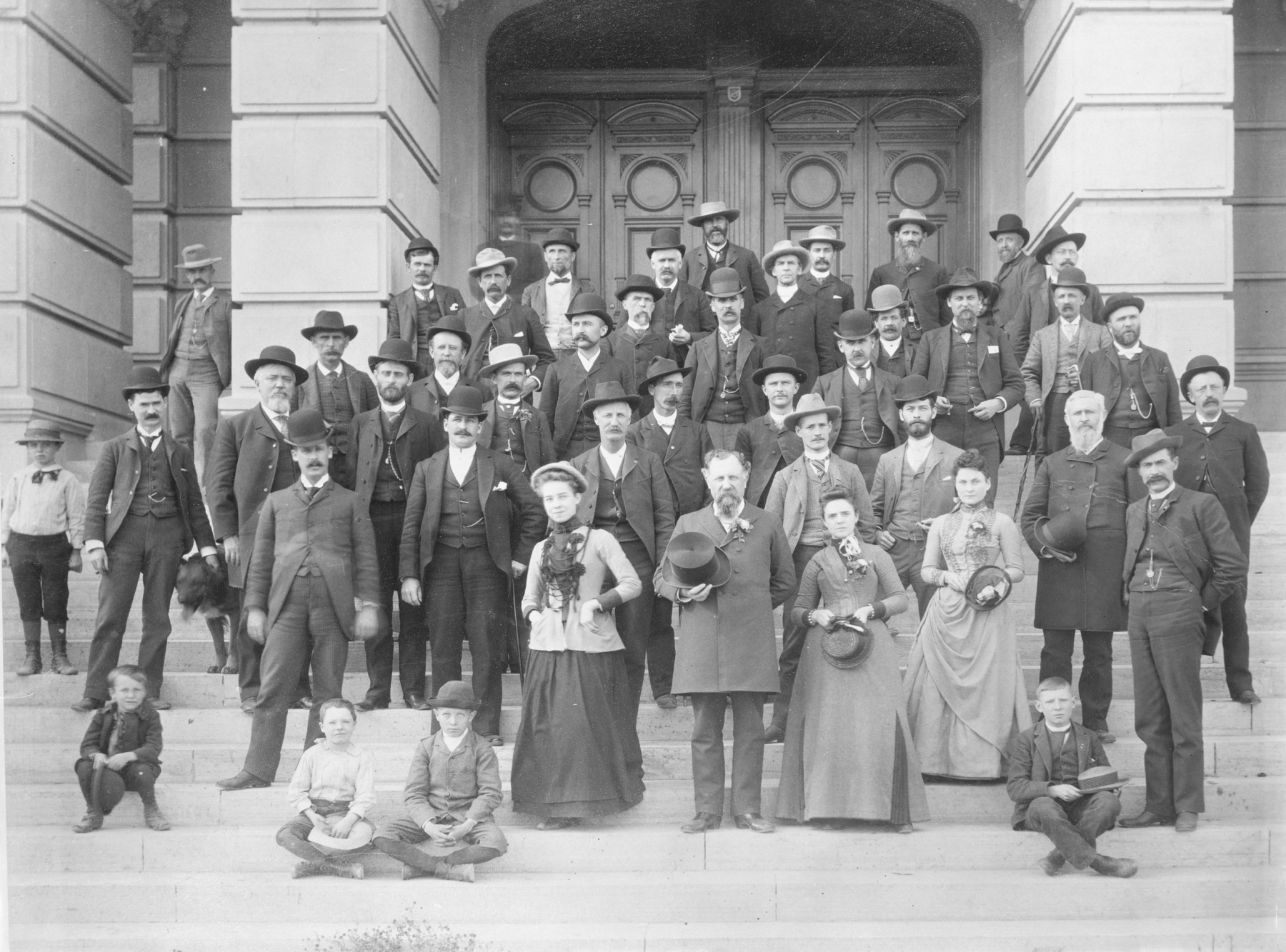
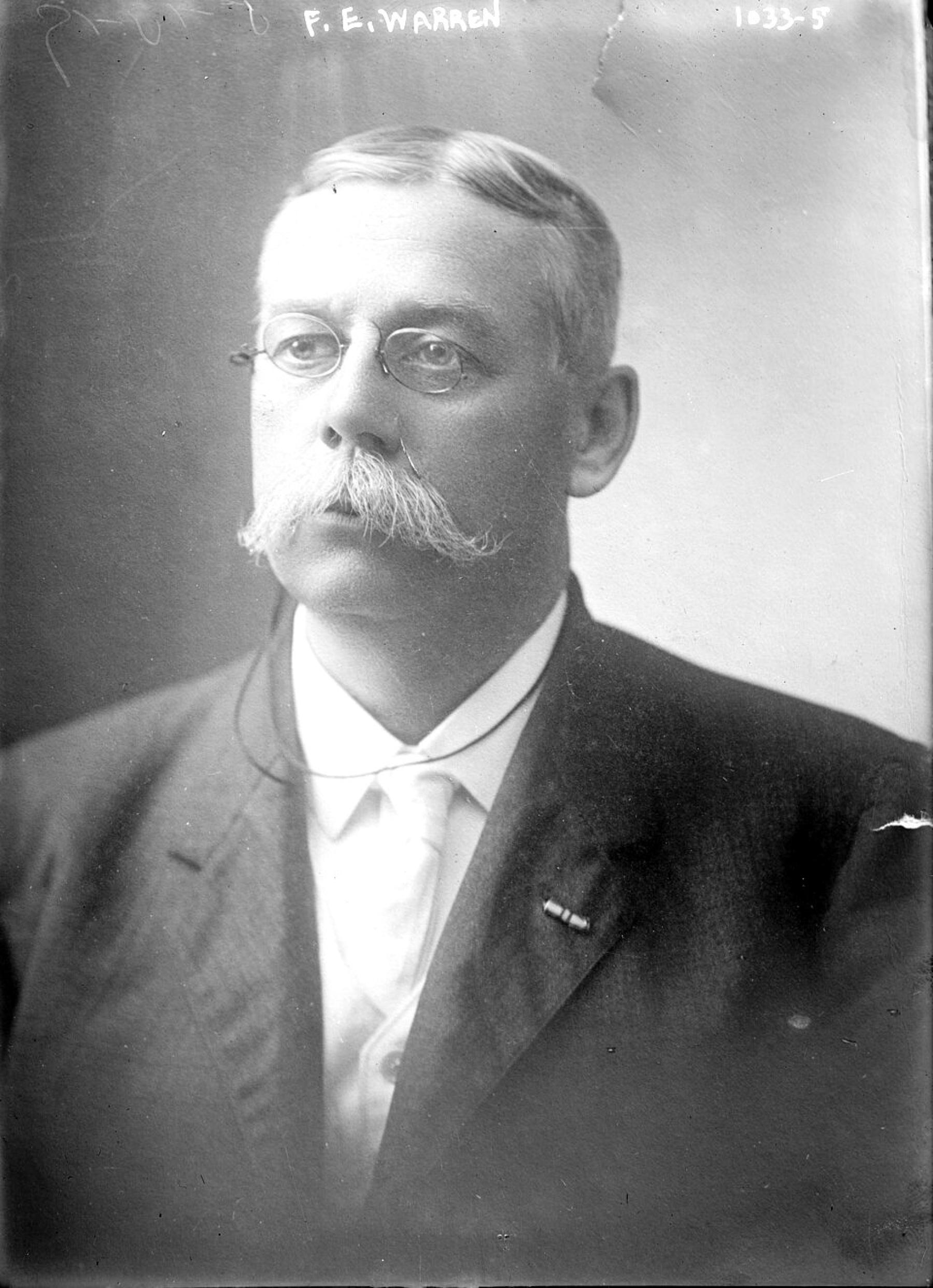
Governor Frances E. Warren submitted letters, including one from New Hampshire’s US Senator Henry Blaire, assuring the delegates that Congress had no grounds to deny Wyoming’s statehood on the basis of woman suffrage. Governor Warren’s wife also submitted her own letter along with a bouquet, requesting the delegates include suffrage in the new state constitution.
Still, delegate A.C. Campbell of Laramie County introduced a proposal to present suffrage as a separate proposition to the people of Wyoming. Hearing that woman suffrage was up for debate, Therese Jenkins went door to door calling for her neighbors and friends to gather in protest on the Capitol steps. Jenkins did not make it to her own protest; the bumpy wagon ride sent her into labor with a daughter she named Agnes Wyoming.
Jenkins did not need to worry. President of the Convention, Melville C. Brown stated that it was inappropriate to question a fundamental right and that he would sooner introduce a separate bill as to whether or not men should have the right to vote. C.W. Holden of Uinta County stated that he would rather Wyoming remain a territory than to enter the Union without woman suffrage intact. Sensing that they were wasting time, the convention quickly moved on.
Congress was another matter.
In the U.S. House of Representatives, Democrats saw an opening. Wyoming was known to lean Republican, and Democrats, the minority party in the House, knew they couldn’t block statehood on partisan grounds alone. But they could raise objections to women’s suffrage, and they did—loudly and at length. One representative declared that the franchise had been “too liberally extended.” Another joked about Wyoming sending women to Congress as senators and representatives, questioning how the chair would address them. Others questioned whether admitting a state where women voted would set a dangerous precedent for the rest of the nation.
Wyoming’s territorial delegate to Congress, Joseph M. Carey, made his case for statehood on the House floor. Curiously, when he introduced the bill, he barely mentioned women’s suffrage at all, a silence that looks like a tactical choice, perhaps calculating that engaging the issue would cost more votes than it won. During the debate, he responded with grace and humor to the attacks on suffrage. Behind the scenes, Carey and territorial governor Francis Warren both wanted statehood badly and worked hard to secure it.
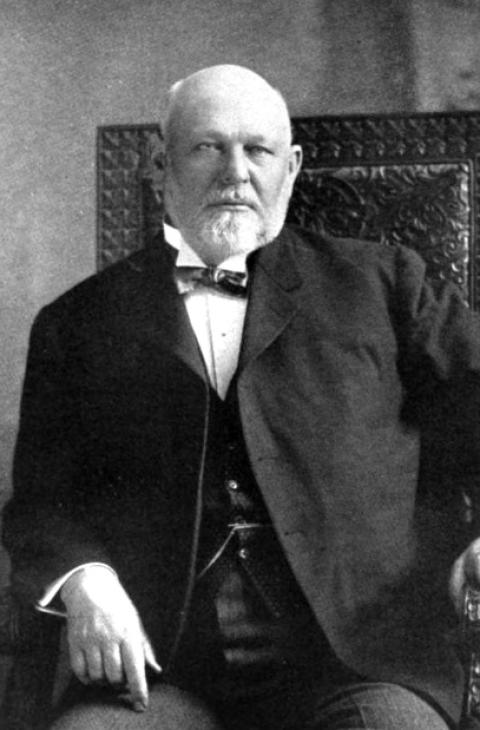
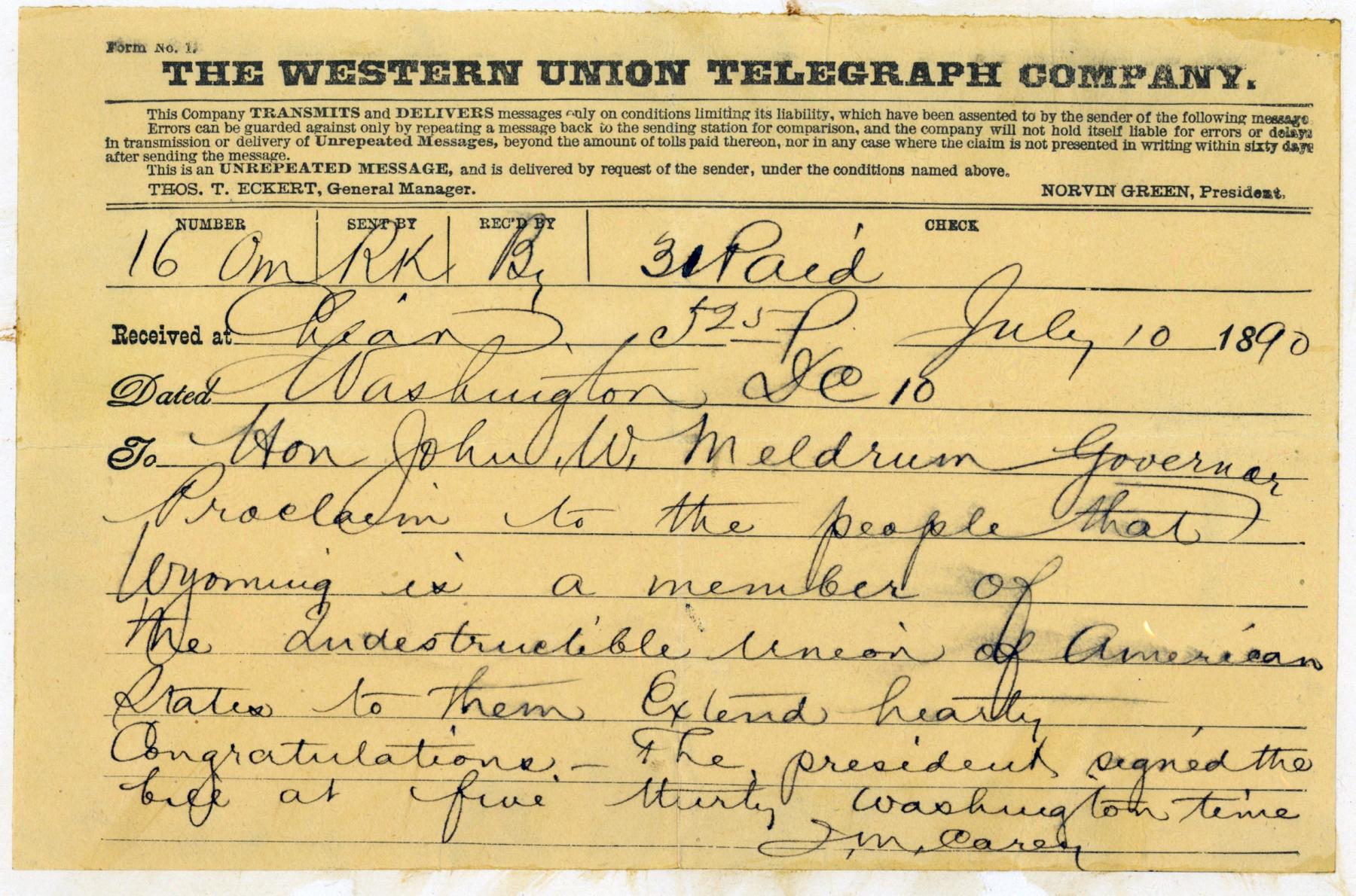
The vote in the House was 139 to 127 in March 1890. Twelve votes separated Wyoming statehood from rejection. The Senate passed the statehood bill by a more comfortable margin of 29 to 18 in July, and Harrison signed it into law. Carey sent a telegram congratulating the people of the new state of Wyoming.
The people of Wyoming celebrated statehood on July 23rd, 1890, with a parade, speeches, and fireworks at the Capitol. Esther Morris, the nation’s first woman judge, presented a 44-star flag to the Frances E. Warren—the first state governor, on behalf of Wyoming’s women.
Newspapers hailed the speech given by Therese Jenkins as the best speech of day because every word could be heard clearly by the crowd. Family lore recounts that Jenkins practiced her speech in the fields with her husband driving their wagon further and further away to see how far she could be heard.
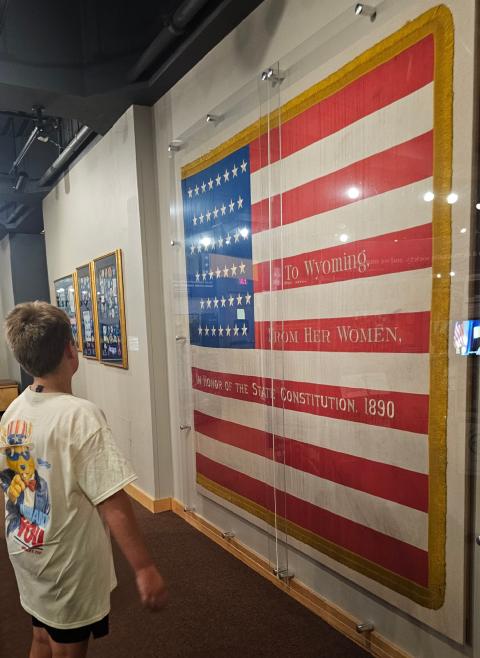
It is worth pausing over what this moment was and what it wasn’t. Wyoming’s 1869 suffrage act had itself passed for mixed reasons, among them a desire to attract women settlers, partisan maneuvering, and a hunger for national publicity alongside genuine conviction. The statehood fight had a similarly tangled character. The Democrats who attacked women’s suffrage were largely trying to block a Republican territory from gaining two Senate seats. Carey’s silence on the issue in his House speech was a calculated choice, whatever his personal views.
And yet something real was at stake. Women had been voting in Wyoming for twenty years. The constitutional convention had written that right into the founding document of the new state with almost no dissent. Whatever mixture of motives had produced it, women’s suffrage in Wyoming was by 1890 simply a fact of life, and Wyoming’s leaders were not willing to undo it. Congress accepted that, if narrowly.
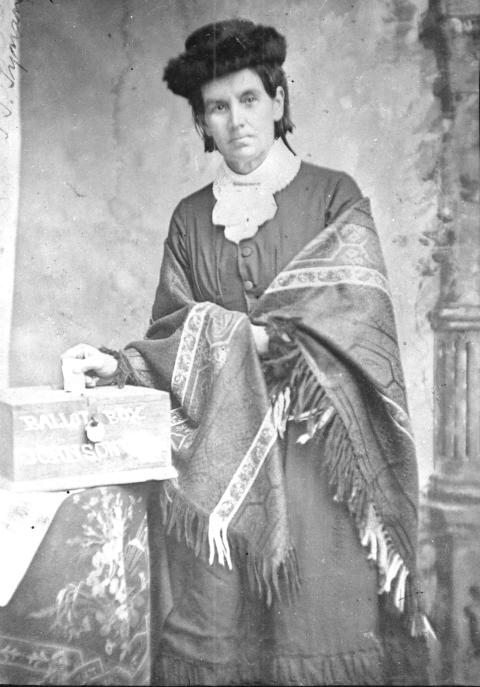
On July 10, 1890, the United States admitted, by a margin of twelve votes, a state that came in without surrendering a right its women had held for twenty years. What Wyoming did with that inheritance in the decades that followed is a longer and more complicated story.
Related articles:
Right Choice, Wrong Reasons: Wyoming Women Win the Right to Vote
Women’s Suffrage in the Wyoming Constitution
Esther Hobart Morris, Justice of the Peace and Icon of Women’s Rights
To ‘Hold a More Brilliant Torch:’ Suffragist and Orator Theresa Jenkins
“Then I breathed freely:” Black Women Vote in Wyoming, 1870
Francis E. Warren: A Massachusetts Farm Boy Who Changed Wyoming