16 Hours of Robbery, Kidnapping, and Murder Across Southwest Wyoming
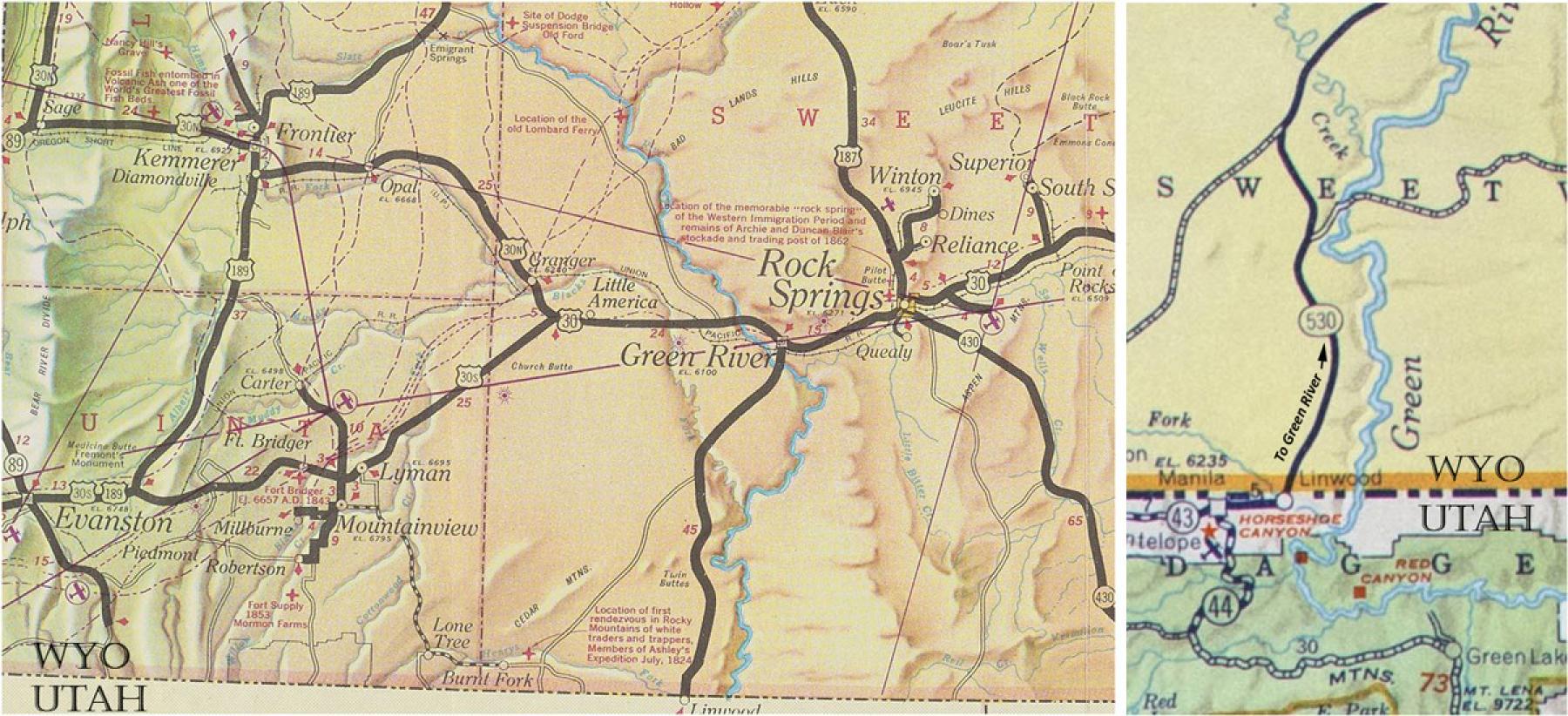
Around 1:30 AM on the cold, snowy morning of March 4, 1955, Frank Kulinsky was making his rounds. The 50-year-old night-shift town marshal of Kemmerer, Wyoming, population 1,600, discovered that the Maffei Motor Company, a filling station, had been burglarized. Accompanied by the co-owner, Albert Maffei, and another filling station owner, Don Wagner, Kulinsky began following a fresh set of human footprints in the snow that led away from the break-in site. A short time later the three men were accosted by the burglar, a young man with a handgun. “Don’t move or I’ll shoot and I don’t mean maybe,” he said, according to Wagner’s testimony later. He disarmed Kulinsky and marched them to his car with their hands in the air.
Before half an hour had passed, the burglar, identified later as Charles Billings, murdered Albert Maffei and shot Kulinsky and Wagner, both of whom survived.
Within hours Billings robbed a filling station in Evanston, 50 miles away, kidnapped the teenage attendant and stole his car, abandoning his own vehicle. And around 6:15 p.m. that day he gunned down Ed Phillips, a Sweetwater County deputy sheriff, in the railyards in Green River and was himself killed by a Union Pacific Railroad special agent after he took a family hostage at a nearby residence.
A Short, Shadowy Life and a Dual Identity
No one knows what brought Charles Earnest Billings to Kemmerer that night. A drifter originally from Cody, he had lived in Casper, Worland, Pinedale, and Thermopolis. Aside from a theft charge lodged against him when he was a juvenile that landed him at the Wyoming Industrial Institute (also called the Wyoming Boys’ School) in Worland, he had no criminal record.
He was born in Cody in 1931. His parents’ marriage was a troubled one. In 1941 his father, Charles Billings, Sr., was charged in Park County with Child Abandonment, pleaded guilty, and sentenced to 1 to 1½ years in the Wyoming State Penitentiary.
In 1948, a 16-year-old Billings was charged in Cody with the theft of a High-Standard .22 semi-automatic pistol valued at $54.00 and committed to the Wyoming Industrial Institute. Upon his release he enlisted in the Marine Corps, completed basic training, and was assigned to duty in Japan, but was discharged when authorities learned of the 1948 charges and returned him home.
After his discharge, Billings roved from job to job around Wyoming as an oilfield worker and ranch hand. Around 1952 he assumed a new identity—that of Melvin H. Gray. Using that pseudonym, for a time he worked on the Dean Binning Ranch in Sublette County and was romantically involved with Binning’s daughter. His mother, Ida Billings, said later that her son had been involved in a car crash in or near Worland that injured a teenage girl. The girl’s father, she said, threatened to sue and Billings adopted the alias in an effort to evade a lawsuit. (Another version of this story maintained that Billings was driving the car on approval from a dealer and wanted to avoid legal trouble with him.)
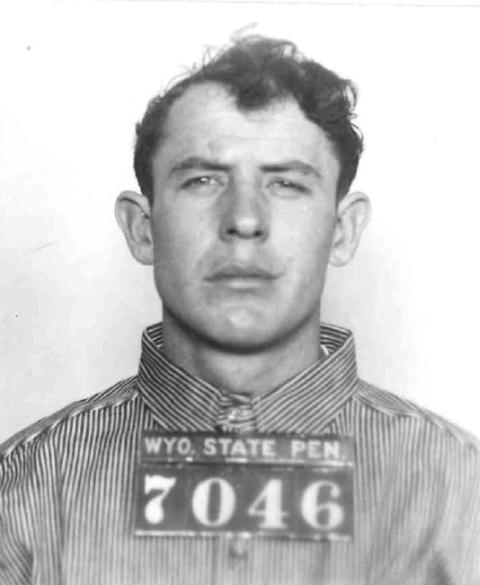
Melvin Gray, the man, was real enough. Born in Perkins County, South Carolina, in 1927, he was an Air Force veteran who moved to Wyoming after his discharge in 1948. In 1950 he was charged with forgery in Basin, Wyoming, convicted, and sent to the Wyoming State Penitentiary in Rawlins. He was released in 1951. After Billings was killed, Hot Springs County Sheriff Eddie Todorovich of Thermopolis told the Rocky Mountain News that “both Gray and Billings were arrested on traffic violations [in Hot Springs County] in May 1952 and had spent some time in the same cell.”
At first Billings was misidentified by authorities as Gray. The car abandoned in Evanston was registered to Gray, and Billings was wearing Gray’s belt buckle and watch when he was killed in Green River. When Billings’s true identity became known, it was thought Gray was another of Billings’s victims. Within days, though, Gray was located in Portsmouth, Virginia, very much alive. He was interviewed by the Portsmouth Herald on March 8, as reported by the Casper Morning Star:
GRAY AND KILLER PARTED IN CASPER
PORTSMOUTH, Va, March 8. Melvin H. Gray, who was thought to have been the man who killed in a flight through Wyoming and Utah last Friday, described the killer as “mean and wild” and “a little crazy” here today.
Gray, who has lived in the area about two years while employed by a South Norfolk, Va., trucking firm, explained how Charles Billings of Cody, Wyo., established himself as Gray.
He said he and Billings were in Casper, Wyo., in July of 1952 after quitting a job together. “I decided to go to Denver,” he said. “So I left my wallet, watch, I-D bracelet, belt buckle and $75 worth of clothing with him to hold for me. I never saw him again.”
“This Charlie Billings was 19 when I knew him,” Gray continued. “All he had was a mother and a sister in Thermopolis, Wyo. Billings’ old man was killed in a gun fight in Butte, Mont., about 10 years ago.”
“Charlie was mean and wild, but we got along all right together. He was just a little crazy, I guess. He had done a few things that were wrong when I knew him, but he had never killed anyone.”
Details Emerge
On March 9, 1955, Sweetwater County Coroner Bill Villanova, working in tandem with County Attorney Joe Wilmetti, convened an inquest into Billings’s death. The witnesses called were Sweetwater County Sheriff George “Mac” Nimmo, Don Wagner (the Kemmerer filling station owner who survived Billings’s attack), Robert Durrant (the teenager Billings kidnapped in Evanston), Sweetwater County Deputy Sheriff Steve Babel, Dr. R.C. Stratton, Wyoming Highway Patrolman Art Reese, and Wyoming Highway Patrolman John Hampton.
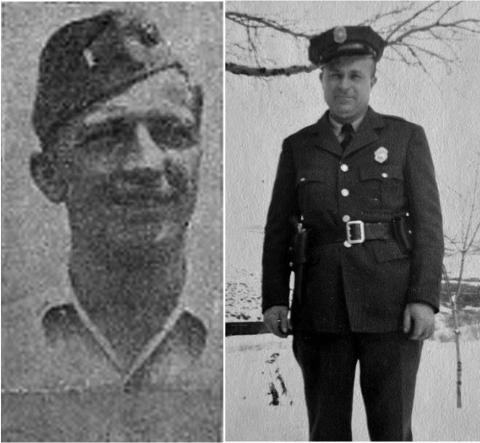
Wagner testified that he’d been called down to his filling station by Kulinsky around 1:30 a.m. on March 4 to fuel two travelers’ vehicles. While Wagner was so engaged, Kulinsky discovered that another filling station, the Maffei Motor Company, had been broken into. Joined by Albert Maffei, the co-owner of the Maffei Motor Company, the three men followed a fresh set of footprints in the snow that led away from the site of the burglary.
The tracks led to the rear of the Ford Motor Company and from there to a spot not far from the Frontier Supply Company, where they were confronted by Billings, armed with a pistol. Billings removed Kulinsky’s revolver from its holster. “Let’s go over and get in my car,” he said.
(Earlier in his testimony, Wagner said that while he, Kulinsky, and Maffei were following Billings’s tracks, they noted a parked car, a maroon 1943 Ford two-door bearing Washakie County license plates. In all probability this was Billings’s car, though Wagner did not specifically identify it as such.)
Billings ordered the men into the car, with Wagner behind the wheel, Kulinsky in the front seat alongside him, and he and Maffei in the back seat. According to Wagner’s later testimony, he was directed to drive north:
“...and upon coming to the main highway leading towards Pinedale, which is our new highway, he ordered me to follow that route [U.S. Highway 189] out of town. And the conversation led to the fact that probably he was going to take us out of town and make us walk back and we kept discussing the snow storm. We said it was pretty cold and we would appreciate it if distance wasn’t necessary for him to make whatever getaway he thought was necessary.
"He seemed to be awful with those guns – flipping or whatever they do and I proceeded at about 10-15 miles an hour to this side of the phosphate mines which I estimate to be about four miles and the conversation that this was far enough and he agreed that this was where we should get out. Frank Kulinsky, carrying on the conversation, said ‘Why don’t you take us back a little closer.’ It was snowing real hard and heavy and Albert Maffei’s hands were real cold. I remember Albert’s making the statement because he asked if he could put them in his pocket during the trip out there. Billings said, ‘You don’t have anything in them, do you?’ and I believe he went through the process of searching Albert. He never did search me.
"He decided along with Frank, and we agreed that a little closer back to town was satisfactory with us and I turned the car around in the middle of the highway and proceeded back to Kemmerer and I believe we came within about 1 mile down the road. He at this time said, ‘Stop the car, pull the emergency brake. Get out!’ I climbed out of the car. At the same time I did, Frank did and I didn’t pay too much attention to him. We could walk from here. Everything will be fine and dandy.
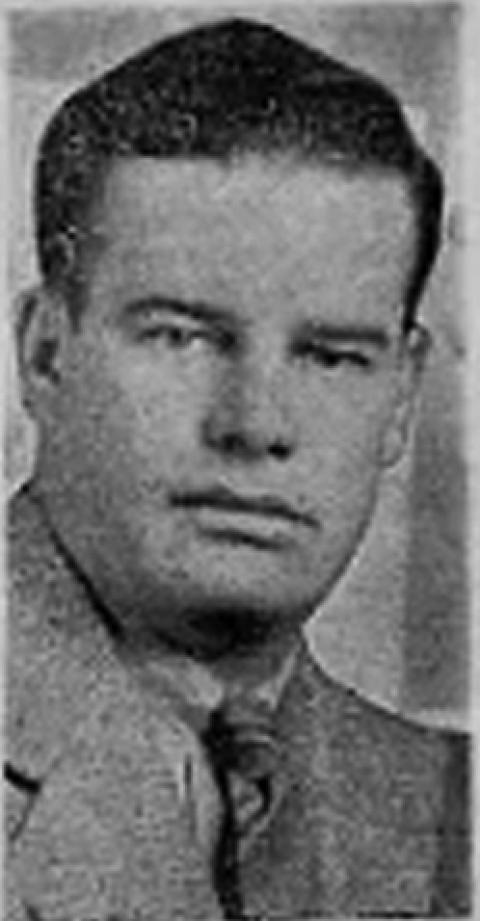
"I walked out from the driver side and on around to the outside of the road. I do not remember if I crossed in front or in back of Frank. I stood next to Frank, Frank being number 1, myself being number 2. I do not remember when Albert climbed out of the car. He said, ‘I kicked your coat out. Just a minute, I’ll throw it back in and I believe he said, ‘Hurry up’ or something like that. I happened to glance down and at the same time he pulled a gun and shot Frank. He then put the gun up to my head.
"I wasn’t scared – didn’t have time to be scared. I thought I was shot. I couldn’t feel anything, just laying there with my back against Frank. When I came to my senses, he was over shooting Albert. I got up and beat it down over the bank at the time, he turned around and fired once or twice more at me.”
Kulinsky was shot in the midsection, his wound serious. Billings fired at Wagner as he fled, grazing his cheek. Billings also shot Maffei at least twice, with the final shot fired into his head.
Billings drove away, headed south, back toward Kemmerer and beyond that, Evanston. Struggling through the snow to a home with a telephone, Wagner called authorities. The manhunt for Billings that would extend across southwest Wyoming was on.
In Evanston, Sergeant Leonard Wold of the Wyoming Highway Patrol and Uinta County Undersheriff Glenn Hutchinson received word that the killer’s car was likely headed their way on Highway 189. Anxious to head it off, they sped north in Wold’s cruiser. Moments later, the car passed them at a high rate of speed, going in the opposite direction and headed for Evanston.
They pursued the car along the snow-slick streets of Evanston until about 5:00 a.m., when it swerved suddenly into the parking lot of the Wasatch Service Station on Front Street. Wold and Hutchinson skidded past, unable to stop. Billings leapt from his car and ran into a field behind the station. While the two lawmen searched the field, Billings circled around them and approached the service station’s front door.
A Robbery and an Abduction
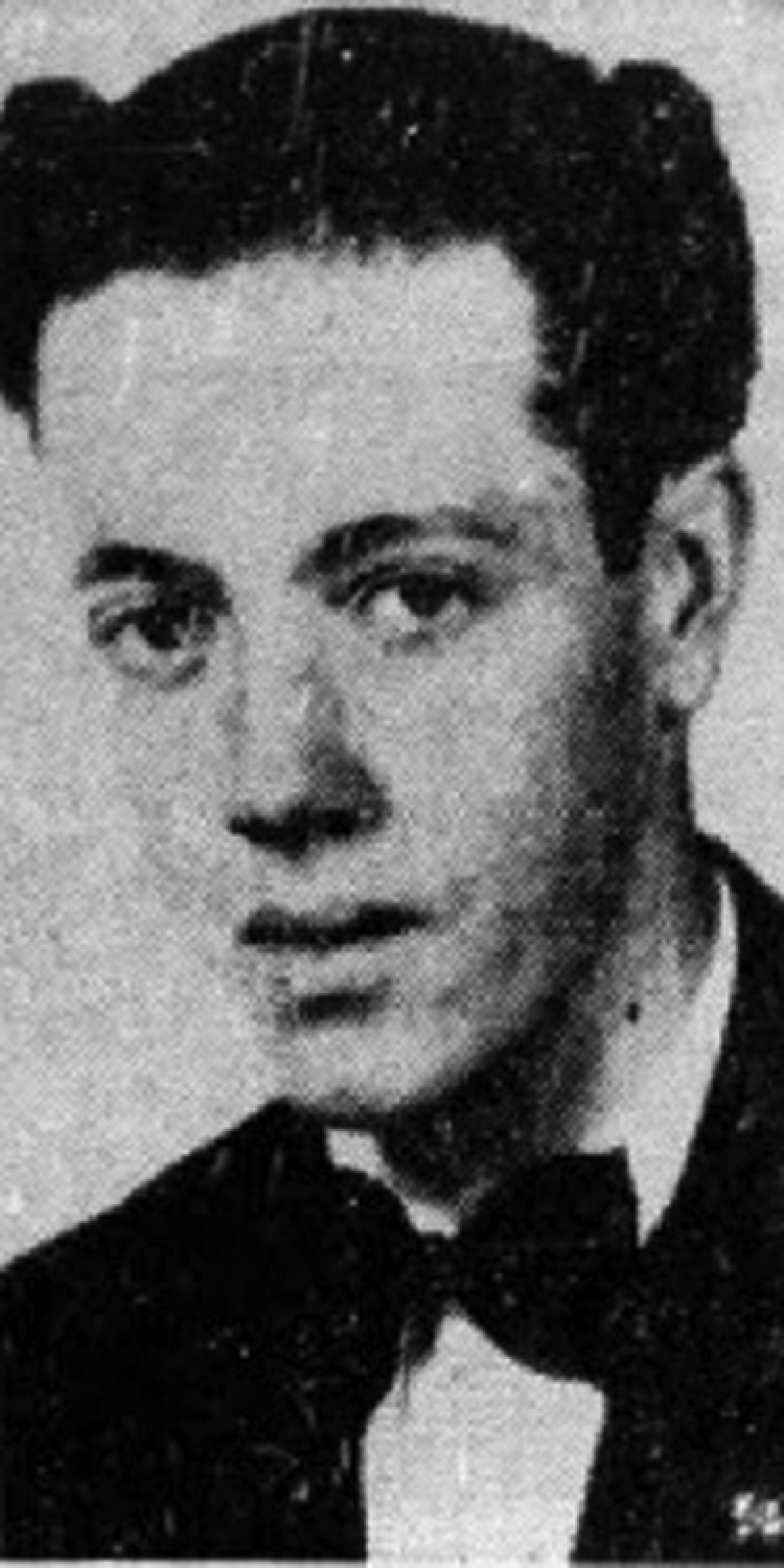
Next to testify before the coroner’s inquest was 17-year-old Robert Durrant, on duty alone that morning at the Wasatch Service Station. He had been alerted that a fugitive might be in the area, and testified that:
“I locked the door again and sat on the desk. I was gonna lay down again. I didn’t think it was too serious or anything. I stuck my gun [a .45 semi-automatic that belonged to the station owner] under my blanket that I had on the desk.
"The guy walked around the corner. I just sat there dumbfounded, didn’t know what to do. He came to the door, rattled the door and tapped on the window, and motioned for me to come over and unlock the door. I got up and walked over there and unlocked the door. Just as I got the door open he stuck - I think it was a .45 in my face and says ‘Where’s your money?’ I walked over to the cash register and unlocked it and pulled the handle and stepped back. He took out a little paper there was in there and stuck it in his pocket. He said, ‘Is that your car out there?’ I said yes. He said, ‘Does it run?’ I said ‘Sure.’ He said ‘Well, let’s go.’” [Durrant’s car was described in 1955 accounts as a “hot rod.”]
With Durrant at the wheel, they drove out of Evanston, going east on U.S. Highway 30. They needed gas, and Billings asked if they could make it to Lyman, 35 miles away. Durrant thought they could. As it turned out, no filling stations were open in Lyman and they proceeded on to Little America, another 25 miles, where they topped off the hot rod’s fuel tank, then continued east.
At the inquest, Durrant continued:
“[We] ...came into Green River. I think it was about 9 o’clock [9:00 a.m.] when we got there, somewhere around there, and he told me to turn right on the first street I came to down toward the tracks. We went under the underpass out of the south end of Green River [toward] Manila [Utah]. There was about four inches of snow on the highway. I took it plenty easy, never went too fast, and he went to sleep. I just kept on driving; didn’t bother him or nothing.
"I came to the junction, woke him up and asked him what way to go, and he told which way to go so we kept on going, and went through Glenwood [Linwood, Utah] into Manila, stopped again and filled up the tank and he paid for that again.
"He said, ‘Turn off this road here to Vernal,’ and we were going up into the Ashley National Forest [on State Highway 44] and he kind of dozed off a little bit. We got to the top and there was a little bit of snow but not too much – I could still make it without chains. We were going down the road. I turned the corner and a great drift stared me in the face. I just hit it, I didn’t have time to do anything else. We got stuck and he said, ‘Have you ever walked 60 miles before?’”
Eventually the two got Durrant’s car unstuck and, unable to proceed further, returned to Green River. There, not far from the train depot at around 5:15 p.m., Billings reluctantly released the teenager and returned his car. Durrant drove out of town headed west, back toward Evanston, on Highway 30.
The Manhunt Intensifies
By mid-morning, law enforcement agencies throughout southwest Wyoming had been alerted and were on the lookout for Billings, who, it will be recalled, had been misidentified as Melvin Gray, as well as the kidnapped Robert Durrant and his stripped-down hot rod, which was a black 1939 Ford with Uinta County license plates.
Sweetwater County Sheriff Mac Nimmo and his undersheriff, C.D. McWilliams, spent most of the day searching highways and back roads in western Sweetwater County and assisting the Lincoln and Uinta County Sheriff’s Offices. Early on, Nimmo saw to it that employees at Little America, a combination service station, cafe, and hotel on Highway 30 about 24 miles west of Green River, were warned. At around 5:35 p.m., he and McWilliams pulled into Little America, where a supervisor rushed to tell them, “the boy you are looking for is in the service station.”
Nimmo and McWilliams drove Durrant back to Green River, interrogating him along the way. Certain now that the killer was in Green River, they radioed in the information and lawmen from the Sweetwater County Sheriff’s Office, Green River Police Department, Wyoming Highway Patrol, and Union Pacific special agents converged on the general area of the train depot and railyards, as it was likely that the killer would attempt to hop a freight. (The Union Pacific Railroad employed its own security men and investigators; these special agents held Sweetwater County deputy sheriff commissions issued by Nimmo.)
Sheriff Nimmo had specific instructions for deputy sheriffs Steve Babel and Ed Phillips. As Babel testified at the inquest:
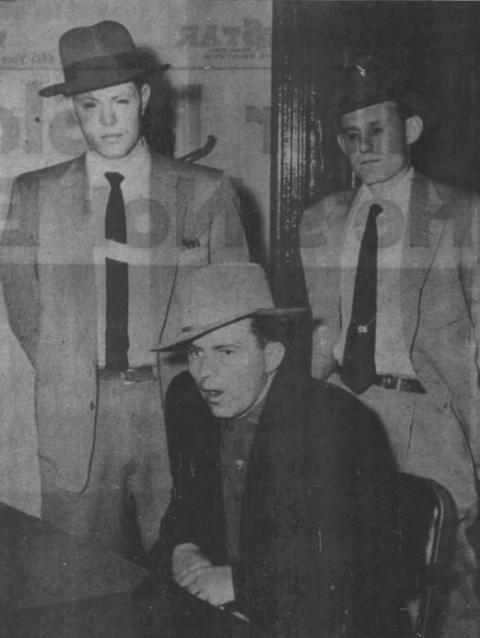
“Nimmo told us to go ahead and investigate, shake down all the cafes, pool halls, and saloons in Green River. That was the order we got from Nimmo, so from there on as we came in on the highway we checked the restaurants, bars, and everything, and after going west through Green River we went on down and started toward the Green River Railroad Station and we checked the Teton Cafe, and the Murphis Cafe. As we came out of the Murphis Cafe, Pete Thallis [Thalas] said he thought he had seen this subject we were trying to apprehend go through the Green River station about three minutes ago...
"In the meantime, Bill Villanova happened to be on the scene at the same time, so he got in the car with us. [This was Sweetwater County Coroner Villanova.] We went over to the station, [a little after 6:00 p.m.] parked the car in front of the station, got out of the car, examined the station thoroughly, entered the station from the north end, went right through after examining all the inside, went out the south door...
"As we started walking down this platform east and then Red [Ed Phillips] noticed this subject first. He came out from one of those little buildings, down along the line, and he hollered ‘Halt’...
"That’s the way it was and then this person started running and we all started running and after, this subject hid by a railroad car, only one end was open and he got around and as we were running we didn’t know he had a gun. When Red hollered ‘halt’ he started running for protection from this car and as he turned, he [Billings] brought his arm up and got a rest shot. That was the first way we knew he had a gun. This man was by this railroad car and we were running...
"He was in back of us and he got his gun out and he got a rest shot up along the side of that railroad car and aimed on Red. In other words, he had his gun lined up on Phillips, first and there were two shots fired. [Fired by Billings. One of these shots struck Phillips.]
"And while this was going on, I was running off on the left and as I was going off to the left he more or less turned around by the car and fired two shots at me. I had seen Red go down when I went down. I fired two shots myself underneath the railroad car. My only chance I saw the legs there of this man... Seems like somebody from the back had fired, couldn’t say if it was Red or who. I do not know. [Here Babel was referring to Phillips and Coroner Villanova, who, presumably, was armed.]
"When I fired these two shots, I got up and I noticed that Villanova and Red were down. I turned around and said, ‘Is Red very bad?’ and he said, ‘I don’t think so, Steve.’ And I said to take care of him and he said, ‘Yes.’”
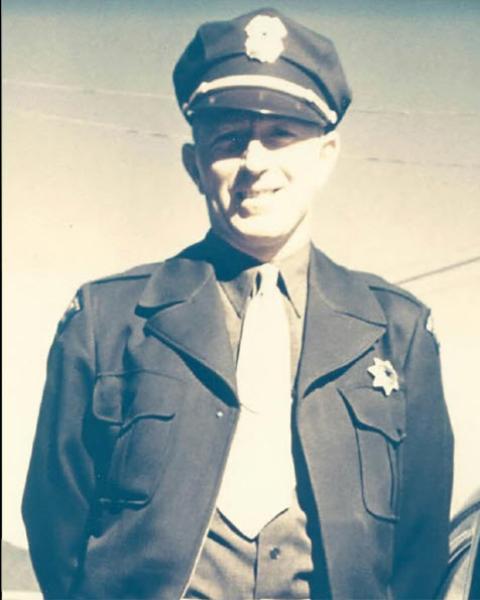
Phillips was transported to the hospital in Rock Springs, where he died the next day. To this day, he is the only Sweetwater County deputy sheriff killed in the line of duty.
Billings was gone. Babel resumed his search of the railyard and soon encountered Officer Roy Cameron of the Green River Police Department. Railroad workers told the two they’d heard shooting, and indicated that the sound had come from a residential area south of the tracks. The source was a small frame house at 161 South 4th East, the home of Gus Kalivas, his wife Mary, and their twin daughters, Effie and Rula, age 20 months.
A Family Taken Hostage
Billings ran the roughly 300 yards from the railyard to the Kalivas home, pursued on foot by Union Pacific Special Agents Ed Brittenham and Gaylord Sherman. Two Wyoming Highway Patrolmen, Art Reese and John Hampton, were nearby searching the neighborhood in Reese’s patrol car. They spotted Billings running toward the Kalivas home, pistol in hand, with Brittenham close behind.
As Reese testified before the coroner’s inquest:
“As we got to the corner, there was a woman in the yard screaming [Georgia Kalivas, Mary Kalivas’s sister-in-law] and it was a brown house probably the 3rd house from the corner. I swung around and stopped. We both jumped out and Brittenham was there and he said he had been chasing him...
"We went up the front steps, Sherman, Hampton, and myself... I could see a man and I could see he was armed. I could look to our left, on the north side of the living room sitting on a chair was a lady with either one or two children, looked like her arms were around them. [This was Georgia Barbarigos, Mary Kalivas’s sister, with little Effie and Rula.] I could see his head, and could see his arm. He had his arm out with a gun in his hand and pointed at that woman, and children. We were still in the doorway and I don’t recall his exact words except, ‘I will kill them,’ and he repeated this two or three times, ‘I will kill them,’ or words to that effect.
"I stepped back over to the front door, and I could no longer see this man from where I was. But all of a sudden Sherman had that shot gun, carried it like this, shoved it through the window and pulled the trigger. There was complete silence for a few seconds.”
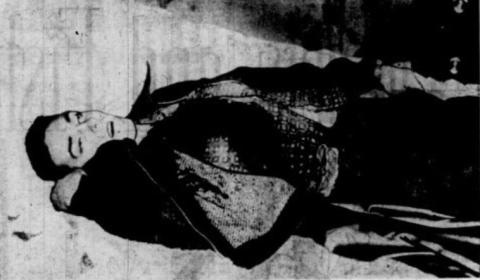
Georgia Barbarigos and her two little nieces fled the house, unharmed. The shotgun blast struck Billings in the upper right chest and he collapsed onto a bed, face up. He did not die immediately, but lived long enough to say, “I am dead, damn it, come and get me,” according to Patrolman Hampton. (During the inquest, the question was raised about another gunshot wound noted on Billings’s body; one to the “back of the kneecap.” It was speculated that Special Agent Brittenham fired the shot an instant before Sherman fired his, but the issue was not resolved.)
A Question of Identity
At the scene, Robert Durrant identified the body as that of the man who had kidnapped him in Evanston. At the time he was still believed to be Melvin Gray, and early media reports named him as such. On Sunday, March 6, however, Nimmo announced that the dead killer’s fingerprints did not match those of Melvin Gray on file at the Wyoming State Penitentiary in Rawlins.
As reported by the Rocky Mountain News on March 7, Dean Binning, the Sublette County rancher who had employed Billings and knew him as Melvin Gray, came to Green River to identify the body. He told Sheriff Nimmo that the body was that of the man he’d known as “Gray,” who had a sister in Thermopolis, Wyoming, named Claudine Balen. Nimmo contacted Mrs. Balen, who said she knew about the identity change, but could provide no reason for it. She also said she’d seen a photograph of the body in the Rocky Mountain News and recognized the figure as her brother, Charles Billings. He was subsequently identified in person by her and their mother, Ida Billings.
The findings of the coroner’s inquest came as no surprise:
“We the jury find that Charles Earnest Billings, Jr., came to his death as a result of a shotgun wound in the upper right breast inflicted by an officer of the law, namely Gaylord Sherman, a commissioned deputy sheriff of Sweetwater County, Wyoming, in the performance of his authorized duty and while protecting his own life and the lives of other citizens of the community and, we the jury do exonerate the said Gaylord Sherman of any fault in the matter.”
Unresolved Questions
Why did Billings travel to Kemmerer in the first place? What made him decide to shoot Wagner, Kulinsky, and Maffei, yet leave Durrant unharmed? And what was really behind his assumption of Melvin Gray’s identity, and Gray’s willingness that he do so? (The nebulous explanations provided by Billings’s family members and Gray himself were dubious at best.)
The inquest findings brought the case to an official close, but these questions remain. In all likelihood, though, they will never be answered.
Editor’s Note: Special thanks to the Wyoming Cultural Trust Fund, whose support helped make the publication of this article possible.
Images courtesy of the Wyoming State Archive, the Wyoming Newspaper Project, United Press, Find A Grave, and Dick Blust Jr.
References
- Reva Cullen. “News Photo Convinces Sister of Killer,” Rocky Mountain News, March 7, 1955, 5, cols. 1-3, accessed December 8, 2025 https://www.coloradohistoricnewspapers.org/?a=d&d=RMD19550307-01.2.24&srpos=31&e=--1954---1956--en-20--21--txt-txIN%7ctxCO%7ctxTA-Nimmo-------0------
- “Dead Wyoming Killer Used At Least 2 Different Names,” Great Falls Tribune, March 7, 1955, 1, cols 5-6, accessed March 20, 2025, https://www.newspapers.com/image/238729698/?match=1&terms=Melvin%20Gray.
- “Death of Bandit, Deputy Sheriff Here Ends Day-Long Chase,” Green River Star, March 11, 1955.
- “Ex-convict Impersonated by Slayer Found Alive,” Rocky Mountain News, March 8, 1955, 5, cols. 4-6, accessed January 27, 2025. https://www.coloradohistoricnewspapers.org/?a=d&d=RMD19550308-01.2.23&srpos=12&e=--1954---1956--en-20--1--txt-txIN%7ctxCO%7ctxTA-Nimmo-------0------.
- “Gray and Killer Parted in Casper,” Casper Morning Star, March 9, 1955, 4, cols. 1-2, accessed March 8, 2025, https://www.newspapers.com/image/348103507/?match=1&terms=Melvin%20Gray.
- “In the Matter of the Death of Charles Ernest Billings, Jr., who met his death as a result of a gun shot wound on March 4, 1955.” Sweetwater County Coroner’s Report, March 9, 1955, Sweetwater County Historical Museum, Green River, Wyoming.
- “Kidnap-Killer Used Alias, Police Say,” The Salt Lake Tribune, March 7, 1955, 25, cols. 6-8, accessed March 8, 2025,
- https://www.newspapers.com/image/598659312/?match=1&terms=inquest%20green%20river.
- “Killer is Slain, But He’s Not Ex-Con,” The Casper Tribune-Herald, March 6, 1955, 1, cols. 3-6, accessed March 8, 2025, https://www.newspapers.com/image/348081498/?match=1&terms=Melvin%20Gray.
- “Railroad Man Exonerated in Killer’s Death,” Rocky Mountain News, March 10, 1955, 22, col. 2, accessed January 27, 2025, https://www.coloradohistoricnewspapers.org/?a=d&d=RMD19550310-01.2.80&e=-------en-20--1--img-txIN%7ctxCO%7ctxTA--------0------.
- “Shotgun Blast in Green River Ends Killers Reign of Terror; Phillips is Critically Hurt,” The Rock Springs Daily Rocket, March 8, 1955.
- “Wyoming Slayer Man of Mystery,” Rocky Mountain News, March 6, 1955, 1, cols. 1-6, accessed March 8, 2025, https://www.coloradohistoricnewspapers.org/?a=d&d=RMD19550306-01.2.21.1&e=--1954---1956--en-20--21--txt-txIN%7ctxCO%7ctxTA-Nimmo-------0------.
- “Sister Identifies Killer as Cody Man, 23,” Rocky Mountain News, March 6, 1955, 5, cols. 4-6, accessed March 8, 2025, https://www.coloradohistoricnewspapers.org/?a=d&d=RMD19550306-01.2.21.1&e=--1954---1956--en-20--21--txt-txIN%7ctxCO%7ctxTA-Nimmo-------0------.
- “Killer Identified as 23-Year-Old Cody Man,” Rocky Mountain News, March 6, 1955, 8, cols, 1-6, accessed March 8, 2025, https://www.coloradohistoricnewspapers.org/?a=d&d=RMD19550306-01.2.21.1&e=--1954---1956--en-20--21--txt-txIN%7ctxCO%7ctxTA-Nimmo-------0------.
- “Slain Gunman in Wyoming is Identified,” The Idaho Statesman, March 7, 1955, 5, col. 1, accessed February 6, 2025, https://www.newspapers.com/article/the-idaho-statesman-charles-e-billings/135162523/.
- “Wyoming Kidnapper is Slain,” Rocky Mountain News, March 5, 1955, 1, cols. 2-6, accessed January 27, 2025, https://www.coloradohistoricnewspapers.org/?a=d&d=RMD19550305-01.2.5&e=--1954---1956--en-20--21--txt-txIN%7ctxCO%7ctxTA-Nimmo-------0------.
- “Wyoming Kidnap-Slayer Killed; Youth Set Free,” Rocky Mountain News, March 5, 1955, 5, col. 1-6, accessed March 8, 2025, https://www.coloradohistoricnewspapers.org/?a=d&d=RMD19550305-01.2.26&srpos=6&e=--1955---1956--en-20--1--txt-txIN%7ctxCO%7ctxTA-Melvin+Gray-------0-Denver-----.
- “Kidnap-Slayer Killed, Youth Freed Unharmed,” Rocky Mountain News, March 5, 1955, 6, cols. 1-3, accessed March 8, 2025, https://www.coloradohistoricnewspapers.org/?a=d&d=RMD19550305-01.2.26&srpos=6&e=--1955---1956--en-20--1--txt-txIN%7ctxCO%7ctxTA-Melvin+Gray-------0-Denver-----.
- “Killer Was ‘Real Nice Guy,’ Says Freed Kidnap Victim,” Rocky Mountain News, March 5, 1955, 6, cols. 4-6, accessed March 8, 2025, https://www.coloradohistoricnewspapers.org/?a=d&d=RMD19550305-01.2.26&srpos=6&e=--1955---1956--en-20--1--txt-txIN%7ctxCO%7ctxTA-Melvin+Gray-------0-Denver-----.
- “Shotgun Blast Ends Killer’s Spree,” Casper Morning Stare, March 5, 1955, 2, cols. 1-8, accessed March 5, 2025, https://www.newspapers.com/image/348102248/?match=1&terms=Melvin%20Gray%20Green%20River.