A Quiet Pioneer: James W. Byrd and the Transformation of Public Leadership in Wyoming
This article is part of the Wyoming’s Founding Figures project on WyoHistory.org. Marking America’s 250th anniversary, the project honors the people—across all backgrounds—who have called Wyoming home and shaped its history.
James W. “Jim” Byrd made history in Wyoming when he became the first Black police chief in Cheyenne—and in the state—in January 1966, at a time when African Americans made up less than one percent of Wyoming’s population.1 Over a career spanning municipal, state, and federal law enforcement, Byrd built a record of professional achievement and community engagement that shaped policing and public service in Cheyenne and across Wyoming.2
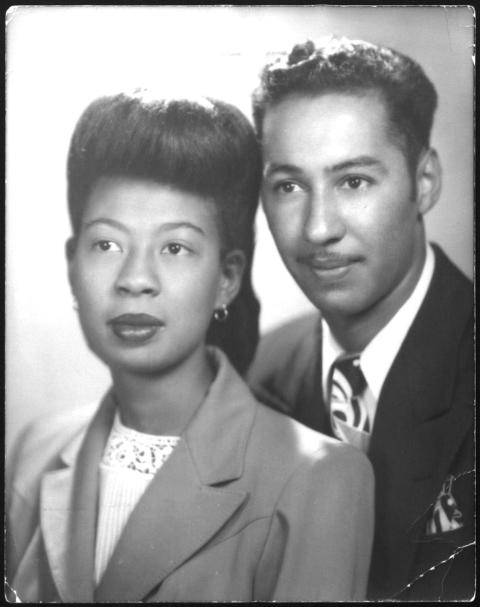
His life was heavily influenced by his family, particularly his wife Harriett Elizabeth “Liz” Rhone Byrd, whom he met and married in Cheyenne after his military service in World War II. Liz Byrd would go on to become Wyoming’s first Black female legislator.3 Their dedication to education, community service, and public leadership modeled civic engagement across decades, and the Byrds’ public service became generational: their son, James W. Byrd II, served in the Wyoming House of Representatives from 2009 through 2018, where he held leadership roles and advocated for issues such as raising the state minimum wage and expanding voting access.4
Early Life and Military Service
James W. Byrd was born on October 22, 1925, in Newark, New Jersey, to Clarence and Elizabeth Byrd.5 Born and raised in an urban East Coast setting, Byrd reached adulthood during the dark days of the Great Depression and World War II—events that molded his character and instilled in him a sense of discipline and responsibility to public service.
Byrd served in the U.S. Army during World War II and was attached to the Quartermaster Corps, European Theater.6 His responsibilities included the procurement and distribution of supplies and ammunition as well as logistical support for training units – critical tasks that required precision, dependability, and collaboration among multiple teams of soldiers.7 Like so many of his generation, the war was formative: it provided structure and accountability, and exposed him to institutions of racial integration and upward mobility that were rare for African Americans in the mid-twentieth century.8
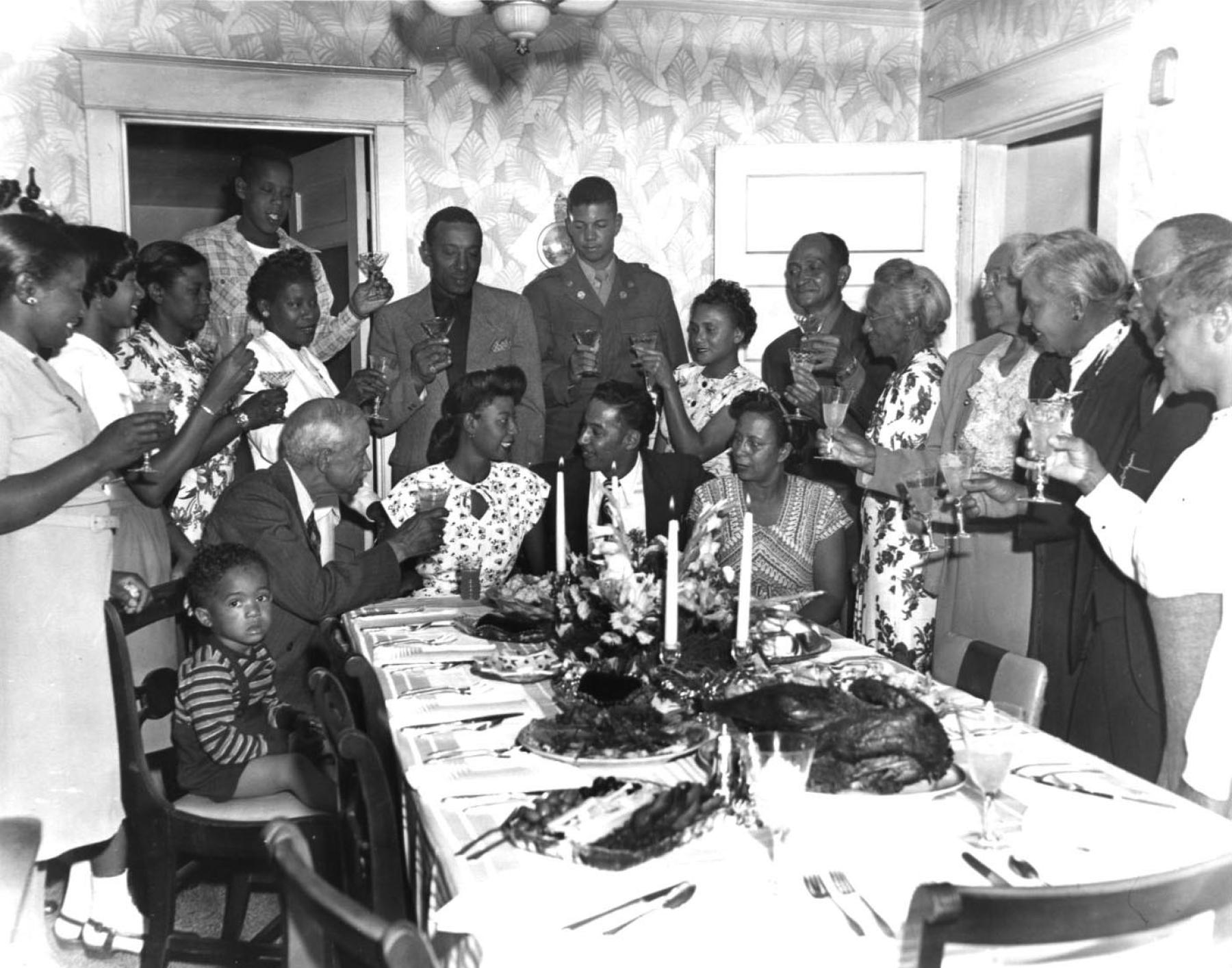
The war also shaped Byrd’s personal life in lasting ways. After his service, he was stationed at Fort Francis E. Warren (later Warren Air Force Base) in Cheyenne, Wyoming, in 1946.9 There he met Cheyenne native Harriett Elizabeth “Liz” Rhone.10 Their meeting was the start of a partnership that would last nearly six decades; they married on August 8, 1947, beginning a shared life rooted in public service and community leadership.11
Byrd was recalled to active duty for the Korean War, and returned to Cheyenne when it ended, settling in the city for the remainder of his life.12 Drawing on the discipline, administrative talents, and leadership skills forged in the military, he began a 25-year career in municipal law enforcement in June 1949 as a patrolman with the Cheyenne Police Department.13
Racial and Political Context in Mid-Century Wyoming
When Jim Byrd arrived in Cheyenne in 1946, Wyoming was a state with a small African American population. According to the 1950 census, Black residents accounted for less than one percent of Wyoming’s population, a demographic reality that set the stage for limited social, political, and occupational opportunities.14 African American communities—shaped by the war and the Great Migration—were closely tied to military service, railroads, and employment in various federal facilities.15 Military installations such as Warren Air Force Base brought in people from all over the country, diversifying Cheyenne and offering small but meaningful opportunities for Black families to lay down long-term roots.
Cheyenne, situated on the High Plains, was not immune from the racial divides typical of the Mountain West. Residents of color faced restrictions on where they could live, enforced through property covenants, and encountered limited access to public accommodations and unequal employment opportunities.16 As late as 1946, African Americans in Cheyenne patronized a separate USO club and faced difficulty gaining entry to establishments like the Plains Hotel, a pattern that persisted into the mid-1950s, when a Black serviceman and his wife were removed from the Plains Hotel’s café by management.17 These conditions helped mobilize support for Wyoming’s Civil Rights Act of 1957, one of the last such public accommodations statutes passed by a non-southern western state.18
In this light, Byrd’s appointment as police chief in 1966 was monumental. Although Cheyenne authorities had publicly stressed his professional credentials, contemporaneous press coverage noted the rarity of his appointment within the nation.19 His rise indicated that competence and years of experience could override ingrained assumptions about race and authority—and it came against the backdrop of a national civil rights movement in which questions of representation and inclusion were being debated across the country, including in places like Wyoming far removed from major centers of protest.20
This demographic and political context helps illuminate Byrd’s accomplishment: he wasn’t just an officer capable of being promoted for excellent service, but a trailblazer whose advancing career mirrored the gradual and uneven opening of opportunities for African Americans in mid-century Wyoming. His appointment represented a turning point in local beliefs about who could run public institutions, marking a small but significant departure from an exclusivist civic identity that had persisted for much of the twentieth century. As Thomas Rudolph, president of the Cheyenne branch of the NAACP, later recalled, the appointment “gave us something when we were young.”21
Rise Through the Ranks: Career Before 1966
When Byrd was hired by the Cheyenne Police Department in 1949, he was entering a force that mirrored the social mores of that time—all white in command, with long-standing policing practices.22 He began as a patrolman, taking on the routine assignments given to new officers. In 1957, after eight years on the job, he was promoted to detective, a role that demanded meticulous case management and close collaboration with city officials, prosecutors, and community members.23 He subsequently served as a juvenile officer, passed a competitive promotional examination in 1961 for the rank of lieutenant, and was advanced to captain in 1963.24 Byrd also pursued professional growth outside the department, studying at the Traffic Institute of Northwestern University in Evanston, Illinois, and at the University of Denver, where he focused on law enforcement administration and public management.25 Together, these experiences gave him a wider perspective on the administrative and social dimensions of policing in an expanding city.26
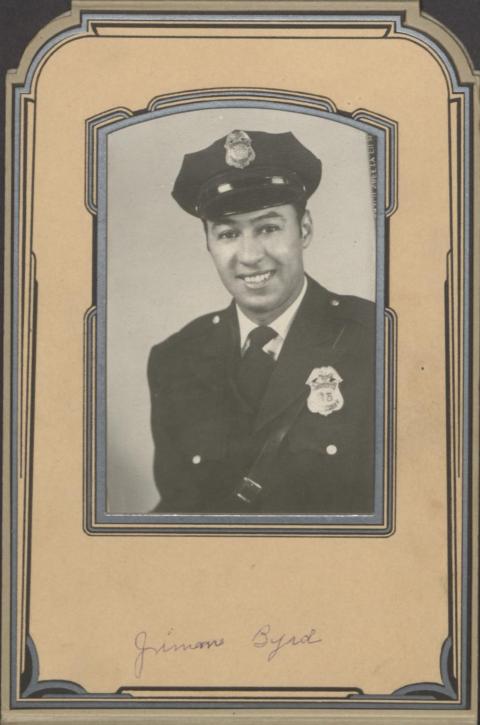
By this time, Byrd had established a reputation within the department for honesty, reliability, and fairness, qualities that colleagues and community members noted throughout his career. Cheyenne’s civic leaders took notice.27 When the city began looking for a new chief in late 1965, Byrd’s nearly two decades of experience, his training at the Traffic Institute, and his steady advancement through the ranks made him a serious candidate despite the racial barriers of the time.28 The foundation for his groundbreaking appointment had been laid long before 1966, in years of careful preparation, quiet leadership, and a record of professional achievement strong enough to help challenge long-held notions about who could lead a public institution in mid-century Wyoming.29
Career as Chief of Police
When Byrd was named Cheyenne’s chief of police in January 1966, he became the first Black police chief in the state, an appointment that drew attention both locally and nationally as an example of Black professional achievement in an overwhelmingly white western city.30 Although he served during a period of changing standards for police-community relations, Byrd maintained the confidence of both his officers and the broader community. Reports from the time note his attendance at local meetings, youth activities, and community events.31 He believed that public trust could not be established at a distance, but only through being present and in conversation with residents.
Byrd’s tenure aligned with a transformative era in American law enforcement. Nationwide, the civil rights movement prompted fresh scrutiny of police practices. Federal programs promoted modernization and training. Cheyenne never experienced the waves of civil unrest seen in some cities, but it wasn’t exempt from the wider forces reshaping American policing.32 Byrd had to navigate the legacy of traditional expectations—themselves embedded in militaristic, chain-of-command policing—while also dealing with mounting demands for transparency and community engagement.33
Byrd worked for eight mayors, each with his own political imperatives, budgetary limitations, and expectations for the department.34 These changing pressures called for diplomacy, and his even disposition and strong administrative skills enabled him to manage these transitions without significant disruption.
As chief, Byrd carried the dual burden of fulfilling the ordinary administrative and public-safety demands of the role while, as a Black leader, embodying what his appointment suggested about the city’s capacity for progress—a position that invited heightened scrutiny throughout his years as chief. The Wyoming Tribune-Eagle regularly covered both his leadership and the historic nature of his position.35 He handled this scrutiny with characteristic subtlety, letting the results speak for themselves.
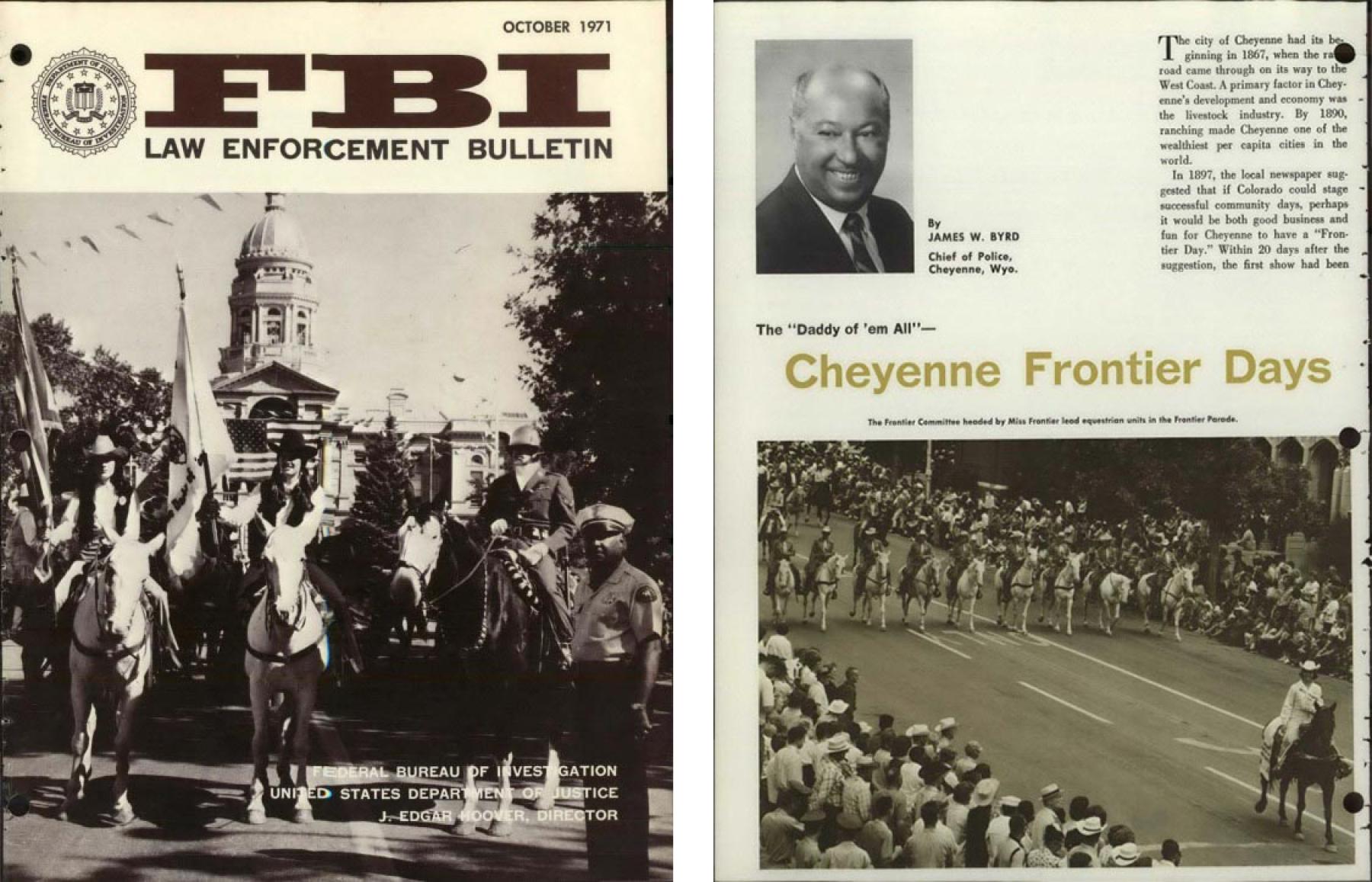
Chief Byrd brought strong administrative knowledge and leadership to the position of chief of police, and with his years in office developed a clear vision for modernizing the Cheyenne Police Department. His approach was an early example of the national trend towards professionalization in the 1960s and 1970s, and his time in office would be defined by sustained attention to training, organizational development, and long-term institutional change. From the outset, Byrd worked to align the department with national best practices, encouraging officers to pursue ongoing training and education and ensuring the department’s active involvement in state and national professional organizations.36 His 1971 article in the FBI Law Enforcement Bulletin, in which he outlined the department’s coordinated approach to policing Frontier Days, offered a model that drew on both organizational planning and interagency cooperation—an early instance of the systematic, professionalized law enforcement he championed.37
From Chief to U.S. Marshal: Expanding Public Service
Jim Byrd retired from the Cheyenne Police Department in 1974, ending twenty-five years of service to the city, eight as its chief.38 Retirement from city policing did not mean the end of his public life. Instead, it marked a shift to larger state and federal responsibilities that reflected the continuing trust placed in his leadership.
Byrd was named director of the Wyoming Office of Highway Safety shortly after leaving the department.39 In that capacity, he directed statewide traffic safety programs, developed educational initiatives, and partnered with law enforcement agencies to reduce accidents and improve enforcement practices. His administrative experience served him well in coordinating these joint efforts at the state level.
Byrd’s commitment to integrity and professionalism led to his appointment as U.S Marshal for the District of Wyoming.40 In this role, he became part of the federal judiciary’s law enforcement arm, tasked with court security, prisoner transport, and coordination with national agencies, an appointment that underscored the trust he had earned over decades of service. While marshal, his office worked in close coordination with the Air Force, including escorting missile convoys at F.E. Warren Air Force Base.41 Following his federal service, Byrd returned to local law enforcement, serving as undersheriff of Laramie County from 1983 to 1988.42
Family, Community, and Partnership with Liz Byrd
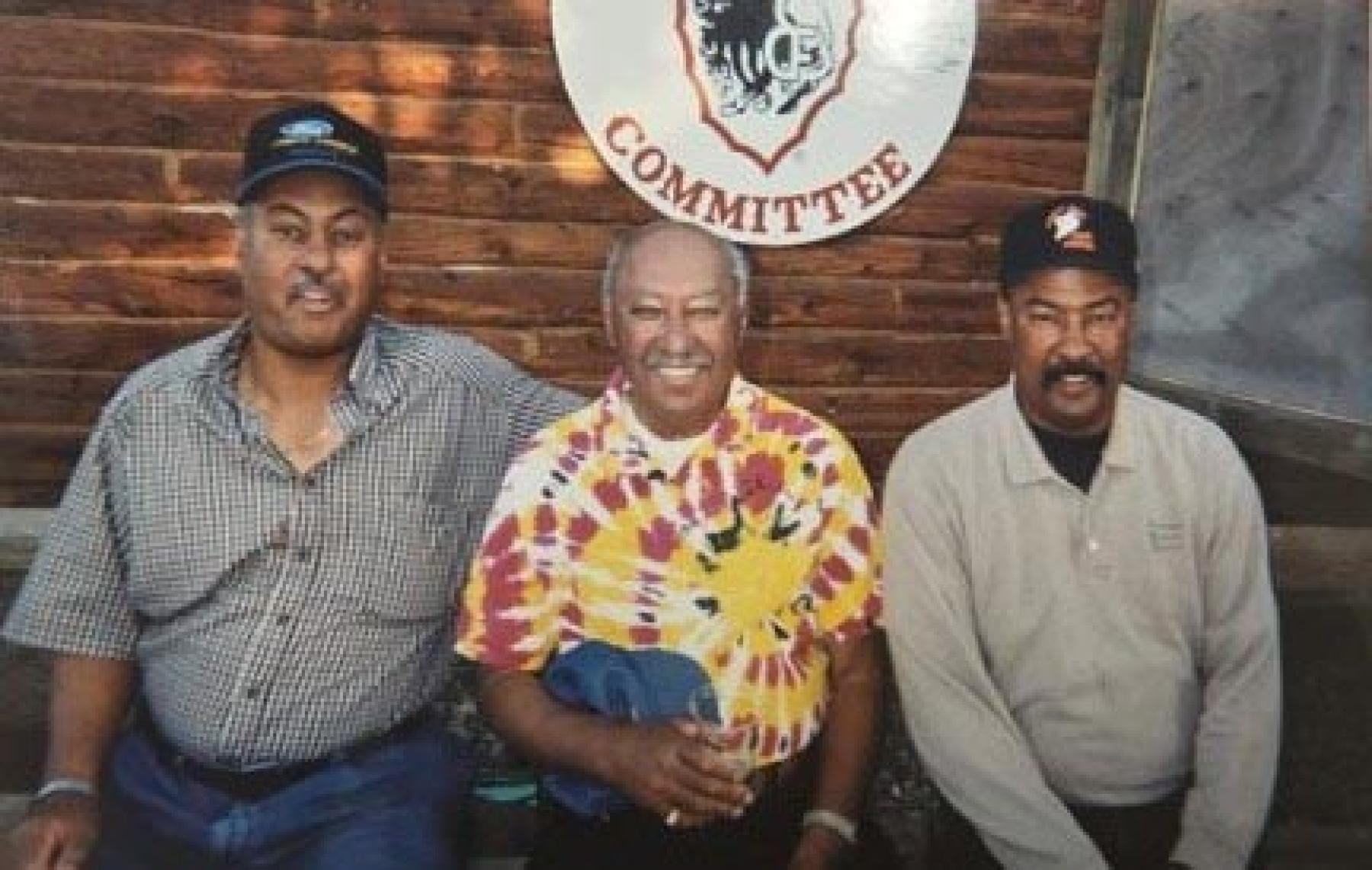
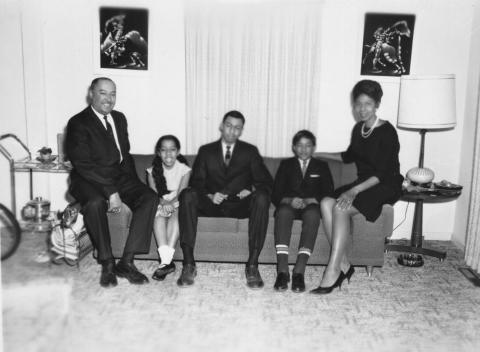
The public life of Byrd was inseparable from his marriage to Liz Byrd.43 Their 58-year marriage reflected a deep civic commitment and sustained engagement in Cheyenne’s social and educational life. Liz Byrd’s election as the first Black woman to serve in the Wyoming Legislature broadened the family’s public role beyond law enforcement.44 They were seen together at school events, church functions, and civic affairs where their warmth and accessibility nurtured lasting relationships in the community.45 Friends and colleagues repeatedly characterized Jim Byrd as calm, gracious, and deeply concerned about the welfare of his neighbors and the children of Cheyenne.46
Legacy and Historical Significance
Jim Byrd’s life remains relevant as an important figure in understanding Wyoming history and the broader story of public leadership in the state. His appointment in 1966 not only broke a barrier but signaled a change in the level of visibility that Black leadership could achieve within Wyoming’s civic institutions.47 In a state where African Americans made up only a negligible percentage of the population, Byrd’s ascent demonstrated how professional excellence and community trust could gradually transform deep-seated assumptions about who held authority and a voice in governance.48
His incremental upward trajectory—from patrolman to chief to positions at the state and national level—epitomized a political culture that rewarded institutional loyalty, managerial efficiency, and personal reputation. His efforts to professionalize the Cheyenne Police Department and help establish statewide law-enforcement standards left an institutional legacy that endured beyond his years in office.49
James W. Byrd died on December 5, 2005, in Cheyenne, at the age of eighty, survived by his wife Liz, three children, and six grandchildren. A Memorial Mass was held at St. Mary's Cathedral, where he had been a longtime parishioner, and he was entombed at Olivet Cemetery. His career had unfolded against the backdrop of significant racial and institutional change, and the record of professional achievement he built over more than five decades of public life remains an important part of Wyoming's mid-century history.
Footnotes
-
U.S. Bureau of the Census, U.S. Census of Population: 1950, vol. II, Characteristics of the Population, Part 50, Wyoming, table 14 (Washington, D.C.: U.S. Government Printing Office, 1952).
-
Wyoming State Archives, Oral History Collection, OH-1375, interview with James W. Byrd, Cheyenne, Wyoming; “James W. Byrd—1925–2005,” Wyoming Tribune-Eagle, December 11, 2005, 6.
-
Lori Van Pelt, “Liz Byrd, First Black Woman in Wyoming Legislature,” WyoHistory.org, May 24, 2015, accessed January 22, 2026, https://www.wyohistory.org/encyclopedia/liz-byrd-first-black-woman-wyoming-legislature; Gracie Lawson-Borders, “Harriet Elizabeth “Liz” Byrd (1926- ),” BlackPast.org, 2009, accessed January 24, 2026, https://blackpast.org/african-american-history/byrd-harriet-elizabeth-l….
-
“James W. Byrd II,” interview by The HistoryMakers, July 10, 2025, accessed April 11, 2026, https://www.thehistorymakers.org/biography/honorable-james-w-byrd; “James Byrd, House District 44,” Wyoming Legislature, accessed May 3, 2026, https://www.wyoleg.gov/Legislators/2012/H/1241.
-
“James W. Byrd—1925–2005,” Wyoming Tribune-Eagle, December 11, 2005.
-
“James W. Byrd—1925–2005,” Wyoming Tribune-Eagle, December 11, 2005; Wyoming State Archives, Oral History Collection, OH-1375, interview with James W. Byrd.
-
Wyoming State Archives, Oral History Collection, OH-1375, interview with James W. Byrd; U.S. Army Quartermaster Museum, “A Brief History of the Quartermaster Corps,” accessed May 3, 2026, https://qmmuseum.army.mil/research/history-heritage/general-history/A-Brief-History-Of-The-Quartermaster-Corps.html.
-
Quintard Taylor, In Search of the Racial Frontier: African Americans in the American West, 1528–1990 (New York: W. W. Norton, 1998), 251–252.
-
Jessica Lowell, “Ex-Police Chief Dies,” Wyoming Tribune-Eagle, December 8, 2005, 1; “Byrd Lists Goals as Candidate for Sheriff,” Wyoming State Tribune-Eagle, October 31, 1974, 21; Wyoming State Archives, Oral History Collection, OH-1375, interview with James W. Byrd.
-
Lowell, “Ex-Police Chief Dies”; “Byrd Lists Goals as Candidate for Sheriff,” Wyoming State Tribune-Eagle, October 31, 1974, 21; Wyoming State Archives, Oral History Collection, OH-1375, interview with James W. Byrd.
-
“James W. Byrd—1925–2005,” Wyoming Tribune-Eagle, December 11, 2005; Wyoming State Archives, Oral History Collection, OH-1375, interview with James W. Byrd.
-
“James W. Byrd—1925–2005,” Wyoming Tribune-Eagle, December 11, 2005; Wyoming State Archives, Oral History Collection, OH-1375, interview with James W. Byrd.
-
Wyoming State Archives, Oral History Collection, OH-1375, interview with James W. Byrd; “Byrd Lists Goals,” Wyoming State Tribune-Eagle, October 31, 1974; “James W. Byrd—1925–2005,” Wyoming Tribune-Eagle, December 11, 2005.
-
U.S. Census of Population: 1950, vol. II, Characteristics of the Population, Part 50, Wyoming, table 14.
-
Taylor, In Search of the Racial Frontier, 224, 252, 278.
-
Ann Esquibel Redman, oral history interview by Leslie Waggener, April 22, 2022, American Heritage Center, University of Wyoming; [1] Kim Ibach and William Howard Moore, “The Emerging Civil Rights Movement: The 1957 Wyoming Public Accommodations Statute as a Case Study,” Annals of Wyoming 73, no. 1 (Winter 2001), 2–13; Taylor, In Search of the Racial Frontier, 251–252.
-
Ibach and Moore, “The Emerging Civil Rights Movement”; Wyoming State Archives, Oral History Collection, OH-1375, interview with James W. Byrd.
-
Ibach and Moore, “The Emerging Civil Rights Movement.”
-
Kirk Knox, “Byrd Named New Police Chief,” Wyoming State Tribune, December 30, 1965, 1.
-
Taylor, In Search of the Racial Frontier, 278–310; Knox, “Byrd Named New Police Chief”.
-
Lowell, “Ex-Police Chief Dies.”
-
Knox, “Byrd Named New Police Chief”; “James W. Byrd—1925–2005,” Wyoming Tribune-Eagle, December 11, 2005.
-
“Byrd Lists Goals,” Wyoming State Tribune-Eagle, October 31, 1974; “James W. Byrd—1925–2005,” Wyoming Tribune-Eagle, December 11, 2005.
-
“Byrd Lists Goals,” Wyoming State Tribune-Eagle, October 31, 1974; “James W. Byrd—1925–2005,” Wyoming Tribune-Eagle, December 11, 2005.
-
“James W. Byrd—1925–2005,” Wyoming Tribune-Eagle, December 11, 2005; Wyoming State Archives, Oral History Collection, OH-1375, interview with James W. Byrd.
-
Wyoming State Archives, Oral History Collection, OH-1375, interview with James W. Byrd; “James W. Byrd—1925–2005,” Wyoming Tribune-Eagle, December 11, 2005.
-
Lowell, “Ex-Police Chief Dies”; Wyoming State Archives, Oral History Collection, OH-1375, interview with James W. Byrd.
-
Knox, “Byrd Named New Police Chief,” 1; Wyoming State Archives, Oral History Collection, OH-1375, interview with James W. Byrd; “James W. Byrd—1925–2005,” Wyoming Tribune-Eagle, December 11, 2005.
-
Wyoming State Archives, Oral History Collection, OH-1375, interview with James W. Byrd; “James W. Byrd—1925–2005,” Wyoming Tribune-Eagle, December 11, 2005.
-
Knox, “Byrd Named New Police Chief,” 1; “James W. Byrd—1925–2005,” Wyoming Tribune-Eagle, December 11, 2005; Wyoming State Archives, Oral History Collection, OH-1375, interview with James W. Byrd.
-
James W. Byrd, “The ‘Daddy of ‘em All’—Cheyenne Frontier Days,” FBI Law Enforcement Bulletin 40, no. 10 (October 1971): 2–5.
-
Ibid.
-
Byrd, “The ‘Daddy of ‘em All,’” FBI Law Enforcement Bulletin, October 1971; Wyoming State Archives, Oral History Collection, OH-1375, interview with James W. Byrd.
-
Knox, “Byrd Named New Police Chief,” 1; “James W. Byrd—1925–2005,” Wyoming Tribune-Eagle, December 11, 2005.
-
Knox, “Byrd Named New Police Chief,” 1; “James W. Byrd—1925–2005,” Wyoming Tribune-Eagle, December 11, 2005.
-
“Byrd Lists Goals,” Wyoming State Tribune-Eagle, October 31, 1974; Byrd, “The ‘Daddy of ‘em All,’” FBI Law Enforcement Bulletin, October 1971.
-
Byrd, “The ‘Daddy of ‘em All,’” FBI Law Enforcement Bulletin, October 1971.
-
Wyoming State Archives, Oral History Collection, OH-1375, interview with James W. Byrd.
-
“James W. Byrd—1925–2005,” Wyoming Tribune-Eagle, December 11, 2005; Wyoming State Archives, Oral History Collection, OH-1375, interview with James W. Byrd.
-
Wyoming State Archives, Oral History Collection, OH-1375, interview with James W. Byrd.
-
Ibid.
-
“James W. Byrd—1925–2005,” Wyoming Tribune-Eagle, December 11, 2005.
-
“James W. Byrd—1925–2005,” Wyoming Tribune-Eagle, December 11, 2005; Gracie Lawson-Borders, “Harriet Elizabeth ‘Liz’ Byrd (1926- ),” BlackPast.org, 2009, accessed January 24, 2026, https://blackpast.org/african-american-history/byrd-harriet-elizabeth-liz-1926/.
-
“James W. Byrd—1925–2005,” Wyoming Tribune-Eagle, December 11, 2005; Van Pelt, “Liz Byrd, First Black Woman in Wyoming Legislature.”
-
“James W. Byrd—1925–2005,” Wyoming Tribune-Eagle, December 11, 2005.
-
Ibid.
-
“James W. Byrd—1925–2005,” Wyoming Tribune-Eagle, December 11, 2005; Wyoming State Archives, Oral History Collection, OH-1375, interview with James W. Byrd.
-
Wyoming State Archives, Oral History Collection, OH-1375, interview with James W. Byrd; U.S. Census of Population: 1950, vol. II, Characteristics of the Population, Part 50, Wyoming, table 14.
-
“James W. Byrd—1925–2005,” Wyoming Tribune-Eagle, December 11, 2005; Lowell, “Ex-Police Chief Dies.”